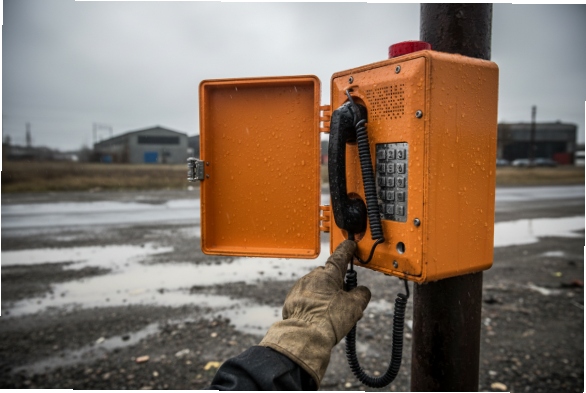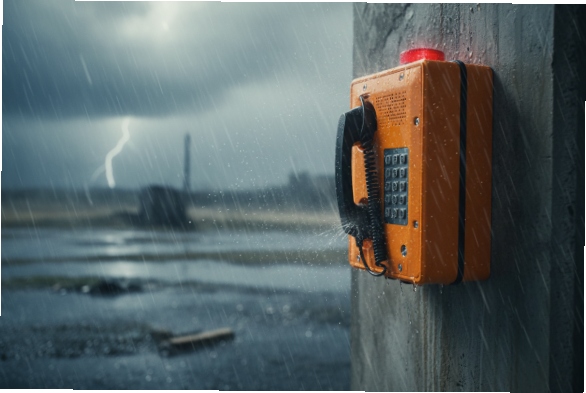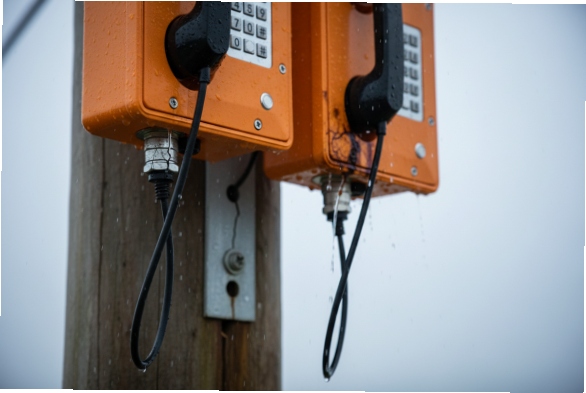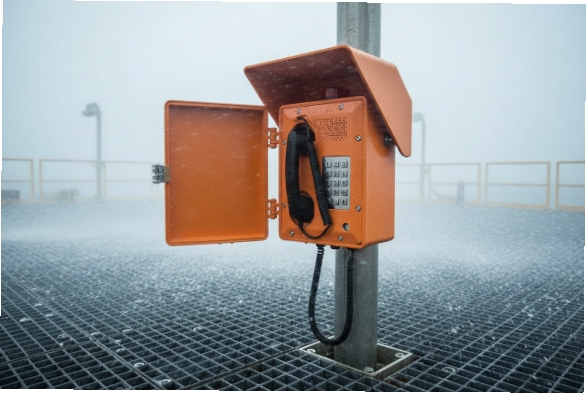
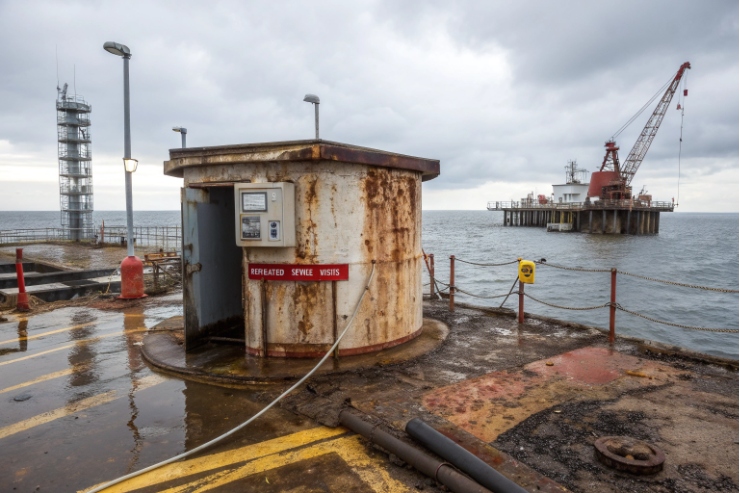
When I consult with clients on a new project, they often obsess over the electronics inside the phone—SIP protocols, codecs, noise cancellation. While these are important, they are useless if the casing dissolves after six months of exposure to acid rain or sea spray.
The choice of enclosure material—typically Stainless Steel 316L, Glass Reinforced Polyester (GRP), or Copper-Free Aluminum—dictates the longevity of the device, with the "best" choice depending entirely on the specific balance of environmental corrosion, physical impact risk, and budget.
Dive Deeper: The First Line of Defense
The enclosure is the armor. In a hazardous area, it performs two functions: it keeps the explosive atmosphere out (or contains the explosion within), and it protects the delicate electronics from the harsh industrial world.
At DJSlink, we offer all three major materials because no single material is perfect for every site. A phone that is perfect for a clean pharmaceutical plant (Stainless Steel 1) might be overkill for a dry warehouse (Aluminum 2) and chemically vulnerable in a fertilizer plant (GRP 3).
Stainless steel 316L, GRP, or copper-free aluminum—how do materials compare for corrosion, weight, and cost?
This is the classic engineering trade-off triangle. You can have cheap, light, or invincible—pick two.
Stainless Steel 316L offers ultimate durability but is heavy and expensive; Copper-Free Aluminum is lightweight and cost-effective but less corrosion-resistant; GRP provides a "Goldilocks" balance—lightweight, corrosion-immune, and moderately priced.
Dive Deeper: The Material Matrix
Here is the breakdown I use when helping procurement managers decide:
| Feature | Copper-Free Aluminum | Glass Reinforced Polyester (GRP) | Stainless Steel (SS 316L) |
|---|---|---|---|
| Cost | $ Low (Budget-friendly) | $$ Medium (Best Value) | $$$ High (Premium) |
| Weight | Light (Easy to install) | Very Light (Best for single installer) | Heavy (Needs robust mounting) |
| Corrosion | Good (with powder coating) | Excellent (Chemically inert) | Superior (The gold standard) |
| Impact | High (Rigid) | High (Absorbs shock) | Extreme (Virtually indestructible) |
| Aesthetics | Painted (Can chip) | Pigmented (Color is deep) | Polished (Premium look) |
My Insight:
Don’t confuse "Aluminum" with soda cans. We use LM6 marine-grade cast aluminum. It is tough. But if you scratch the paint on an oil rig, the salt will eventually eat it. GRP and Stainless Steel don’t have this weakness.
Which material best resists chemicals, salt-spray, and UV in offshore or coastal plants?
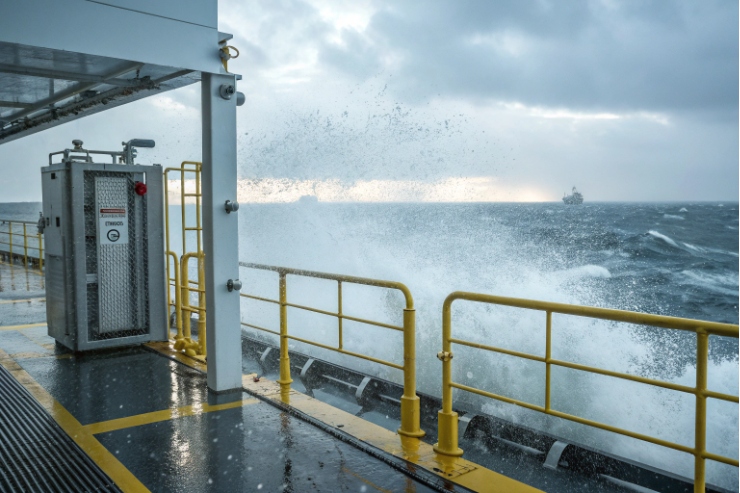
The environment dictates the survival rate. Offshore, salt is the enemy. On land, it might be the sun or chemical vapors.
Stainless Steel 316L is the undisputed king for salt-spray and offshore rigs; however, GRP is increasingly preferred for chemical plants (like fertilizer or acid production) because it is chemically inert and does not suffer from galvanic corrosion.
Dive Deeper: The Salt and The Sun
1. Offshore & Coastal (Salt Spray)
- The Winner: Stainless Steel 316L.
- Why: "316L" contains molybdenum, which specifically resists chloride pitting (salt rust).
- The Aluminum Risk: Even copper-free aluminum relies on its paint. Once the paint chips (and it will), "white rust" (aluminum oxide) forms, jamming hinges and eating threads.
2. Chemical Plants (Acids/Alkalis)
- The Winner: GRP (Glass Reinforced Polyester).
- Why: Steel reacts with acids. GRP is basically a high-tech plastic reinforced with glass fibers. You can splash hydrochloric acid on it, and it won’t care. It is the standard for fertilizer plants and wastewater treatment, and it does not suffer from galvanic corrosion 4.
3. The UV Factor (Sunlight)
- The Winner: Stainless Steel or UV-Stabilized GRP.
- The Risk: Cheap GRP can "bloom" (turn white and brittle) under intense UV radiation in the desert. We add UV stabilizers to our DJSlink GRP mix to prevent this, ensuring it lasts 20 years in the Saudi sun.
How do IP66/67, IK10, and NEMA 4X requirements influence enclosure material selection?
Ratings are not just numbers; they are physical attributes driven by the material’s properties.
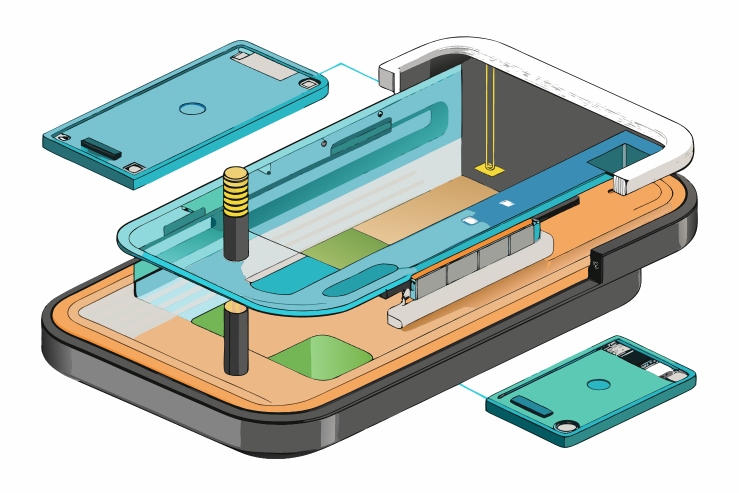
Achieving NEMA 4X (Corrosion Protection) naturally pushes you toward GRP or Stainless Steel; high IP66/67 sealing is easier with molded GRP; while IK10 (Impact) is most easily achieved with the rigid strength of Cast Aluminum or Steel.
Dive Deeper: Engineering the Ratings
1. NEMA 4X 5 (The Corrosion Badge)
To get the NEMA 4X stamp, the enclosure must survive 200 hours of salt spray without pitting.
- Stainless Steel: Passes easily.
- GRP: Passes easily.
- Aluminum: Needs expensive epoxy coatings to pass. If you require NEMA 4X, avoid standard aluminum.
2. IK10 (The Impact Shield)
- Metal (Al/SS): Resists impact by being hard. It might dent, but it won’t break.
- GRP: Resists impact by being elastic. It absorbs the energy and bounces back. However, in extreme cold (-40°C), GRP can become brittle. For Arctic projects requiring IK10, I trust cast metal more.
- GRP Advantage: Since GRP is molded, we can create complex, smooth sealing channels for the gaskets. Metal castings often have rougher surfaces that need machining. GRP tends to maintain its waterproof seal longer because it doesn’t corrode around the gasket line.
For ATEX/IECEx Zone 1/2, when is flameproof cast aluminum preferred over GRP or stainless steel?
Sometimes, the choice isn’t about corrosion; it’s about the physics of the explosion itself.
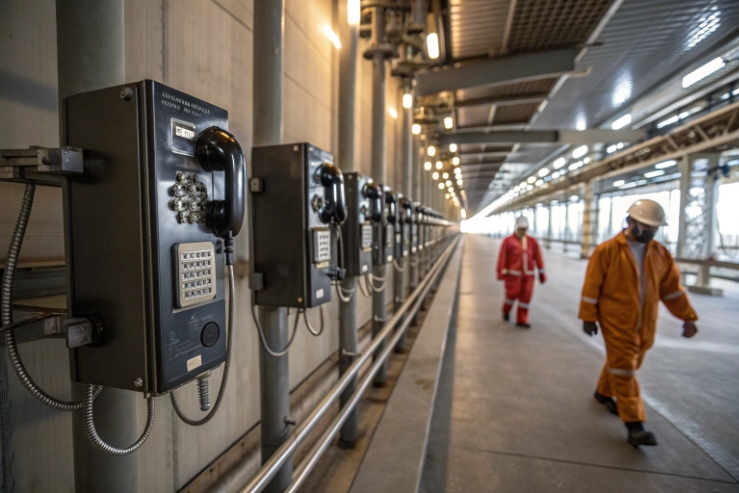
Flameproof Cast Aluminum (Ex d) is the preferred standard for Zone 1 explosion-proof telephones because its thick walls withstand high internal pressure, it dissipates heat from electronics efficiently, and it is significantly lighter and cheaper than creating a similar "Ex d" chamber out of stainless steel.
Dive Deeper: The Ex d Physics
1. Pressure Containment
For Ex d (Flameproof), we assume the gas explodes inside the phone. The box must contain that pressure (often 10-15 bar).
- Aluminum: Easy to cast into thick, complex shapes that are strong.
- Stainless Steel: Very hard to cast or machine into thick Ex d shapes. It becomes incredibly heavy and expensive. Usually, SS Ex d phones are fabricated sheets, which limits design.
- GRP: Can be Ex d, but the walls have to be very thick, making the unit bulky.
2. Heat Dissipation (The Silent Killer)
Electronics generate heat.
- Aluminum: It is a heat sink. It pulls heat from the mainboard and releases it to the outside air.
- GRP: It is an insulator (like a blanket). Heat gets trapped inside. This forces us to use lower-power electronics or risk overheating the T-Class rating.
- Verdict: For high-performance VoIP phones with screens and amplifiers, Aluminum is the superior engineering choice for thermal management in Zone 1 7 environments.
Conclusion
The "best" material is situational. If you are building an oil rig in the North Sea, pay the premium for Stainless Steel 316L. If you are equipping a chemical plant, GRP is your savior. But for the vast majority of standard industrial Zone 1 applications, Copper-Free Aluminum remains the champion of performance vs. price.
Footnotes
-
Detailed properties of marine-grade stainless steel used for corrosion resistance in harsh industrial environments. ↩ ↩
-
Technical insights into the characteristics of aluminum alloys specifically designed for safe use in explosive atmospheres. ↩ ↩
-
Overview of glass reinforced polyester materials, emphasizing their chemical inertness and structural durability. ↩ ↩
-
An explanation of the electrochemical process where one metal corrodes preferentially when in contact with another. ↩ ↩
-
Enclosure ratings that specify protection against water ingress and high levels of corrosion in hazardous areas. ↩ ↩
-
International standards for classifying the degree of protection provided by electrical enclosures against dust and water. ↩ ↩
-
Classification of hazardous areas where explosive gas atmospheres are likely to occur during normal operation. ↩ ↩