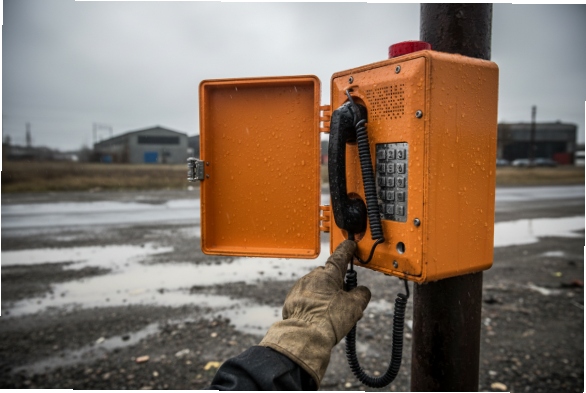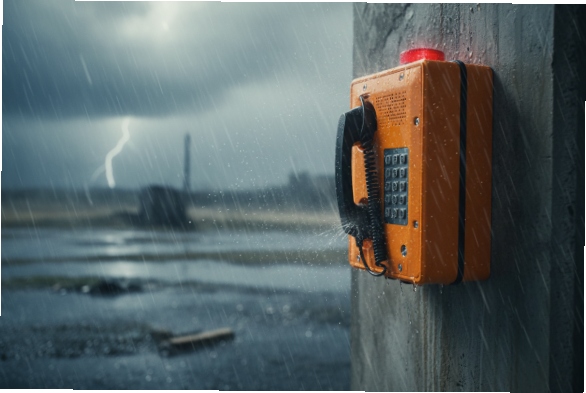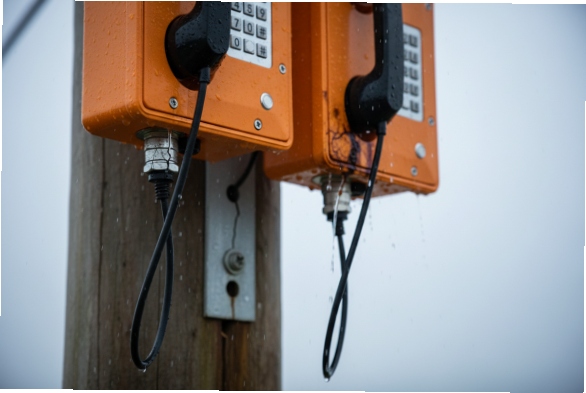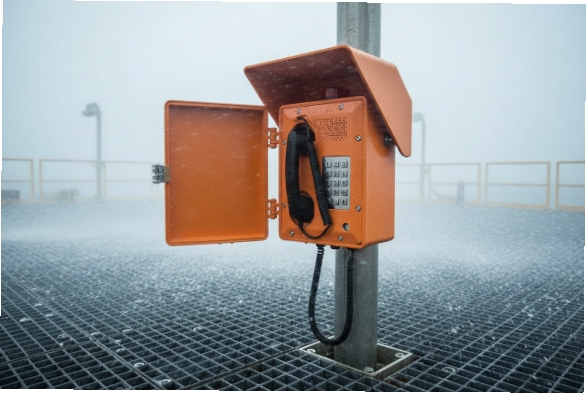

Wrong cable choices do not fail in the warehouse. They fail after commissioning, when EMI noise, water ingress, or a pulled gland turns one phone into a repeat service ticket.
Use industrial-grade Cat5e/Cat6 (often shielded) for most PoE Ex phones, and switch to fiber for runs beyond 100 m, high EMI zones, or between buildings. Add armored cable only when the route needs mechanical protection and verified earth continuity through Ex-approved glands.

A cable selection workflow that survives hazardous plants
Start with the route, not the datasheet
Cable type is decided by what the cable must survive. In a refinery or chemical plant, the same “Ethernet cable” might run through a clean cable tray, then pass a pump skid, then drop into a washdown zone, then enter a Zone 1 enclosure. Each segment changes the risk. That is why the most reliable approach is to document four items first:
1) Distance and topology: copper Ethernet is limited by channel length, while fiber is not limited in the same way.
2) EMI and grounding reality: VFDs 1, large motors, and radio systems can create noise that looks like random network faults.
3) Mechanical threats: moving trays, sharp edges, rodent damage, vibration, and impact exposure.
4) Environment: UV, oil mist, chemicals, salt fog, and temperature at the cable surface.
Treat “Ex requirements” as an entry system requirement
Explosion-proof telephones are not only “rugged endpoints.” The cable entry and gland are part of the certified installation concept. A perfect cable with the wrong gland, or the wrong cable construction for a given gland type, creates risk and also creates certification questions during inspection. The practical point is simple: select cable OD, armor type, and shield termination method that match the Ex-approved gland range and the earthing plan.
Use a decision table to keep procurement clean
This table is the one many integrators use to lock a spec fast and avoid endless email threads.
| Installation condition | Recommended medium | Typical cable construction | Notes that prevent failures |
|---|---|---|---|
| ≤ 100 m, moderate EMI 2 | Copper Ethernet + PoE | shielded Cat6 3 F/UTP or S/FTP, solid copper | Use industrial jacket and proper shield bonding |
| > 100 m, high EMI, between buildings | Fiber | OS2 single-mode 4 (long) or OM3/OM4 (short) | Put media converters/switches in safe area or certified enclosure |
| Exposed tray, impact or rodent risk | Armored copper or armored fiber | SWA/STA or interlocked armor | Use Ex-approved armored glands with armor earth continuity |
| Tunnels/public areas | Copper or fiber | LSZH jacket | Prioritize smoke/toxicity performance and abrasion resistance |
| Offshore/coastal | Copper or fiber | UV + oil resistant jacket, tinned copper if possible | Corrosion control matters as much as bandwidth |
A good cable plan makes the phone look “boring” in operation. No random link drops, no water tracking into glands, and no mystery noise faults after a shutdown.
Now the next sections answer the four questions that decide 90% of real projects.
A phone system is only as stable as its worst cable segment.
Should I use shielded Cat5e/Cat6 or fiber with media converters for long runs and EMI control in hazardous plants?
Noise faults waste more time than clean “hard failures.” A phone that drops calls once a week can look like software trouble, until the cable is replaced.
Use shielded Cat6/Cat6A when copper runs are within 100 m and EMI is moderate, and use fiber when runs exceed 100 m, when EMI is severe, or when galvanic isolation is needed. Keep active media converters in safe areas or inside suitable certified enclosures.
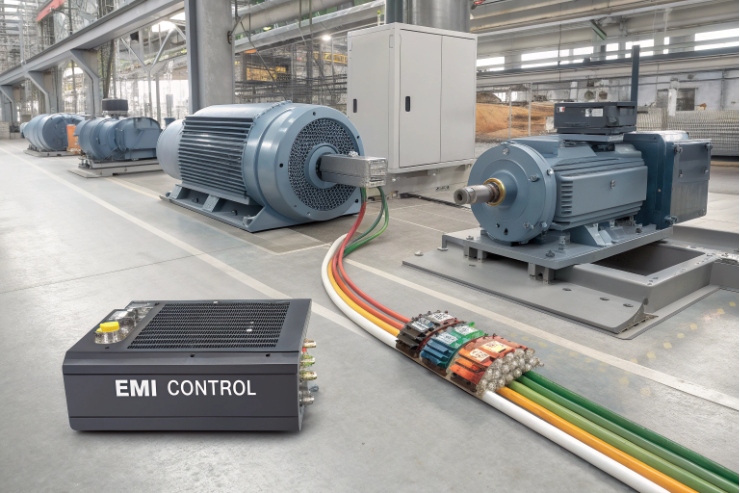
When shielded twisted pair is the best answer
Shielded copper works well when the plant already has a strong bonding network and the route is controlled. For Ex telephones that use PoE, shielded Cat6 is a common “safe default” because it provides better noise margin and often runs cooler in dense bundles. The real value is not the foil or braid by itself. The value comes from correct 360° shield termination at the cabinet side and at the phone enclosure side.
A common field mistake is the “pigtail drain wire” termination. It looks neat, but it adds impedance at high frequency and reduces EMC performance. In harsh plants, shield performance usually improves when the shield is clamped around the full circumference at the entry point, using EMC glands or shield clamps, and bonded to a stable earth reference.
When fiber is the better business decision
Fiber is not only for “long distance.” It is also a strong tool for reliability:
- immune to EMI from motors and other industrial equipment
- breaks ground potential differences between buildings or large steel structures
- reduces the chance that lightning-induced surges travel into endpoints
For hazardous plants, one clean pattern works well: run fiber to a safe-area cabinet near the zone boundary, then run short copper (PoE) into the hazardous area. This keeps active electronics and power injection in the safe area, while still feeding the Ex phone reliably.
Choosing single-mode vs multimode
Single-mode (OS2) is usually chosen when the site is large, distance is unknown, or future expansion is expected. Multimode (OM3/OM4) is often used inside buildings or short campus runs where optics and patching are standardized. The project constraint is often not physics, but spare parts and what the maintenance team already stocks.
| Requirement | Better choice | Why it works |
|---|---|---|
| Heavy EMI near VFD rooms | Fiber | Noise immunity and isolation |
| Simple retrofit inside one building | Shielded Cat6 | Fast termination and PoE support |
| Long runs across plant | Fiber (OS2) | Distance and future-proofing |
| Limited tech skills on site | Copper | Easier troubleshooting tools |
If a plant frequently blames “network instability,” fiber usually ends the argument faster than any software change.
When are armored Ethernet cables required—SWA/STA with Ex-approved glands for mechanical protection and earthing continuity?
Armor is often over-specified. It adds cost, weight, and makes termination slower. But when the route is exposed, armor is the cheapest insurance.
Use armored Ethernet when the cable is exposed to impact, crushing, rodent damage, or harsh vibration, or when the route cannot be protected by conduit/tray. If armor is used, specify Ex-approved armored glands that clamp the armor correctly and provide verified earth continuity without relying on improvisation.
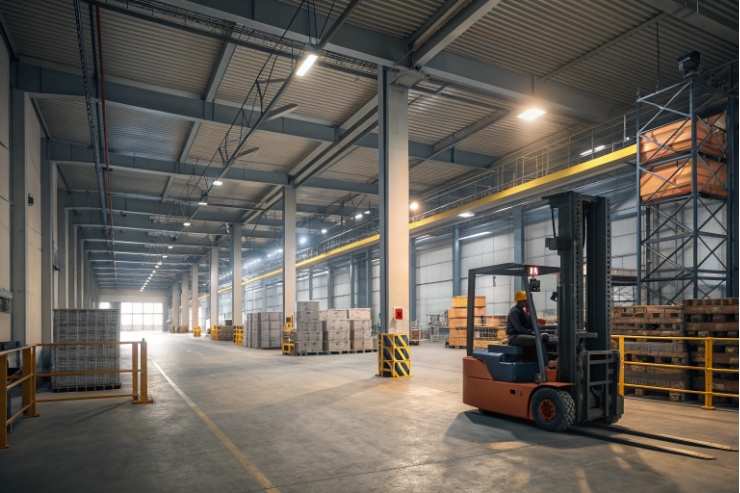
SWA vs STA: pick based on threat type and installation style
SWA 5 (steel wire armor) is common where flexibility and pulling strength matter. STA (steel tape armor) is common where crush resistance matters and the cable is often buried or under mechanical pressure. For Ethernet, both exist as industrial variants, but availability depends on region and supplier base.
The real requirement is not the armor name. The real requirement is:
- the cable can be terminated without damaging pairs
- the armor can be bonded to earth reliably
- the gland system keeps IP sealing after vibration and thermal cycling
Ex-approved glands are a system, not a part number
In hazardous areas, the gland must match the protection concept and also match the cable construction. Some Ex flameproof entry approaches require compound sealing (barrier) for certain cable constructions. This is where projects fail during inspection: the cable has fillers or a construction that does not suit a simple elastomer seal, yet the installer uses a standard gland. The result is rework, not only risk.
A practical procurement spec should require:
- gland certification suitable for the zone and protection concept
- cable OD range match, including outer jacket type
- armor termination method that ensures continuity (not “best effort”)
- sealing method that maintains IP66/67 at the entry
Earthing continuity must be measurable
Armor that is not bonded is just metal decoration. For continuous vibration zones, continuity needs to stay stable for years. That means using proven hardware stacks and banning shortcuts like loose drain wires.
| Route risk | Armor needed? | Gland requirement | Extra note |
|---|---|---|---|
| Inside protected tray | Usually no | Standard Ex gland for unarmored | Focus on shield termination and strain relief |
| Exposed wall drops | Often yes | Ex armored gland with armor clamp | Add external cleats close to entry |
| Buried / ground-level | Often yes | Ex armored gland + sealing control | Consider water-blocking and chemical-resistant jacket |
| Offshore open deck | Often yes | Corrosion-resistant armored gland | Use materials compatible with salt fog |
Armor is most valuable when the route is truly uncontrolled. If the route can be protected, money is often better spent on jacket choice and surge protection.
Which jackets fit the environment—UV/oil-resistant PE or PUR vs LSZH for tunnels, and what temperature rating is needed?
Many “network problems” are jacket problems. UV cracks the outer sheath, oil swells it, and then water travels into the gland area.
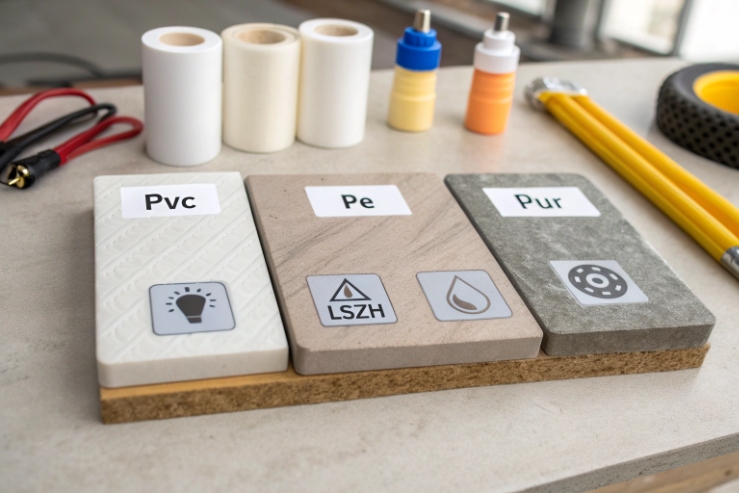
Use PE jackets for strong UV and outdoor weathering, PUR jackets when oil, abrasion, and industrial chemicals are common, and LSZH jackets where smoke/toxicity control is required like tunnels. Choose a temperature rating with real margin for sun load, hot surfaces, and cable bundle heating.
PE: outdoor and UV stability
PE jackets are widely used outdoors because they resist UV and weathering well. For plant perimeter runs, rooftop trays, and outdoor pole routes, PE is often the most stable choice. The trade-off is that PE alone is not automatically “oil resistant,” and fire performance depends on the compound and approvals.
PUR: the industrial workhorse for oil and abrasion
PUR jackets are a strong option in refineries and process plants because they handle oils, coolants, and abrasion better than many standard jackets. PUR also performs well in drag-chain or high-flex areas when the phone cable experiences movement, vibration, or maintenance handling.
LSZH: mandatory language in tunnels and public spaces
LSZH jacket 6 is mandatory language in many tunnel, metro, and public infrastructure specs where smoke density and toxicity are a concern. The trade-off is that some LSZH compounds are stiffer, and not all LSZH jackets tolerate oil mist and chemicals as well as PUR. In practice, this becomes a project decision: life safety compliance first, then chemical resistance via product selection inside the LSZH family.
Temperature rating: add margin for reality
Ambient is not cable temperature. Cable temperature rises in sun, near hot pipes, and in bundled trays with PoE heat. For outdoor Ex telephones, -40°C to +75°C is a common baseline, but +90°C (or higher) may be needed near heat sources or when PoE bundles are dense.
| Environment | Jacket preference | Temperature target | Why it matters |
|---|---|---|---|
| Outdoor UV | PE or UV-rated PUR | -40°C to +75°C (or higher) | UV cracking causes long-term water paths |
| Oil mist / refineries | PUR | -40°C to +75°C / +90°C | Oil and abrasion are constant |
| Tunnels / public | LSZH | Project-defined | Fire smoke limits drive the choice |
| Offshore | UV + oil resistant, corrosion-aware | Wide range | Salt and heat cycling accelerate aging |
If the phone is a safety endpoint, jacket selection should be treated as a safety decision, not only a cost decision.
How do PoE power, 100 m limits, and surge protection influence conductor gauge, shielding, and extender selection?
Many systems pass network tests, then fail when PoE load rises. The cable heats, voltage drops, and the phone reboots right when it is needed.
PoE and distance limits push cable design: use full copper conductors, prefer Cat6/Cat6A with 23 AWG for higher-power PoE or long channels, respect the 100 m channel limit, and add Ethernet surge protection at zone boundaries and outdoor entry points. Use extenders or mid-span switches only where power and certification allow.
The 100 m limit changes topology decisions
Copper Ethernet channels are designed around a 100 m maximum channel length in structured cabling practice. When a run is longer, the clean options are:
- switch to fiber for the long segment
- add an intermediate switch in a safe area
- use an extender only when the plant accepts it and the power plan is clear
For hazardous areas, active devices must be placed in safe areas or in equipment that is correctly certified for the location. This is why fiber-to-a-safe-cabinet is so common in real plants.
PoE power levels push conductor gauge and bundle planning
Explosion-proof telephones often work on standard PoE (Type 1) or PoE+ (Type 2), but video models, heaters, or extra modules can push higher. As power increases, voltage drop and heating become the real limits, not bandwidth. Two practical rules reduce trouble fast:
- avoid copper-clad aluminum conductors
- Cat6A 7 conductors are often preferred (often 23 AWG) for higher power or longer channels
Shielding can also help in two ways: EMI control and sometimes lower temperature rise in bundles, depending on construction. But shielding only helps when it is terminated correctly, with stable bonding at the entry and a clean earthing plan.
Surge protection is part of uptime, not an accessory
Outdoor routes, tall steel structures, and long tray runs can pick up induced surges. A PoE phone is sensitive because the same cable carries data and DC power. A practical surge plan includes building entrances and outdoor-to-indoor transitions.
| Design variable | What to specify | What problem it prevents |
|---|---|---|
| Conductor material | Solid copper (not CCA) | Overheating and voltage drop |
| Conductor gauge | Prefer 23 AWG for higher PoE | Reboots under load |
| Shielding | F/UTP or S/FTP in noisy zones | Random link drops near VFDs |
| Topology | Fiber for >100 m or high EMI | “Unstable network” complaints |
| Surge protection | PoE-compatible Ethernet SPD | Lightning and induced surges |
| Extenders | Only in approved safe areas | Hidden reliability and compliance risks |
PoE cable design is where small savings create large maintenance costs. A slightly better cable and a clean surge plan often pay back in the first year.
Conclusion
Choose medium by distance and EMI, armor by route risk, jacket by chemicals and fire rules, and PoE by voltage drop. For OEM/ODM support: info@sipintercommanufacturer.com.
Footnotes
-
Variable-frequency drives control motor speed by varying frequency and voltage, potentially generating significant electrical noise in cables. ↩ ↩
-
Electromagnetic interference can disrupt electronic equipment and communication signals in industrial plants. ↩ ↩
-
Category 6 cable with shielding protects data transmission from electromagnetic interference in noisy industrial environments. ↩ ↩
-
Single-mode fiber optic cable designed for long-distance data transmission with minimal signal attenuation. ↩ ↩
-
Steel wire armor provides robust mechanical protection and earth continuity for cables in high-risk zones. ↩ ↩
-
Low smoke zero halogen materials reduce toxic gas emission during fires in confined spaces like tunnels. ↩ ↩
-
Category 6A supports higher data rates and improved heat dissipation for power-over-ethernet applications. ↩ ↩