

A phone can be certified for hazardous areas and still break on day one. One hard hit can crack the keypad, bend the faceplate, and stop emergency calls.
Most explosion-proof telephones can reach IK08 to IK10, depending on enclosure material, thickness, and weak points like keypads and windows. The highest common target is IK10 (20 J) under IEC 62262.

The practical ceiling of IK ratings for Ex telephones
IK rating is about impact energy, not “toughness stories”
An IK rating 1 is a standardized impact resistance code for enclosures under IEC 62262. It uses controlled impacts with defined energy levels. This matters because “rugged” is marketing, but IK is measurable. In procurement, IK helps compare products across brands without guessing.
In my day-to-day work, the real limit is rarely the main housing. The limit is usually the weakest external zone:
- keypad area and its mounting
- display or nameplate window
- handset cradle and hook mechanism
- cable entry area around the gland
- door edges and latch zones if the design has a front cover
What Ex design changes about IK targets
Explosion-proof telephones 2 often use thicker housings and stronger fasteners than standard industrial phones. That helps IK. But Ex designs also have features that can reduce impact margin:
- flameproof joints and cover interfaces that must stay flat
- heavier housings that transfer more force into mounting points
- sealed windows that must also keep IP66/67 performance
- certified cable entries that may restrict gland choices
So the best approach is to treat IK as a system target. It is not only a housing number.
A simple “spec first” table used in bids
This table helps set a realistic requirement before the project becomes a debate.
| Site risk level | Typical IK target | Why it is used | Common design focus |
|---|---|---|---|
| Office / control room | IK07–IK08 | Accidental bumps | Standard metal or GRP housing |
| Process area / outdoor | IK08–IK09 | Tools and hose hits | Thick faceplate, protected corners |
| Public access / tunnels | IK09–IK10 | Intentional impacts | Vandal faceplate, recessed keypad |
| Prison / offshore / extreme | IK10 + extra measures | Repeated abuse | Anti-pry design and reinforced mount |
A phone can claim IK10 and still fail in a prison if the mounting flexes, or if the handset cord becomes a lever. That is why the next sections go beyond the code and focus on what truly controls survival.
Which IK codes are typical for Ex phones—IK08, IK09, or IK10—and what Joule impact does each represent under IEC 62262?
A buyer often asks for IK10 right away. But if the phone is inside a protected plant area, IK09 may be enough and saves cost and weight.
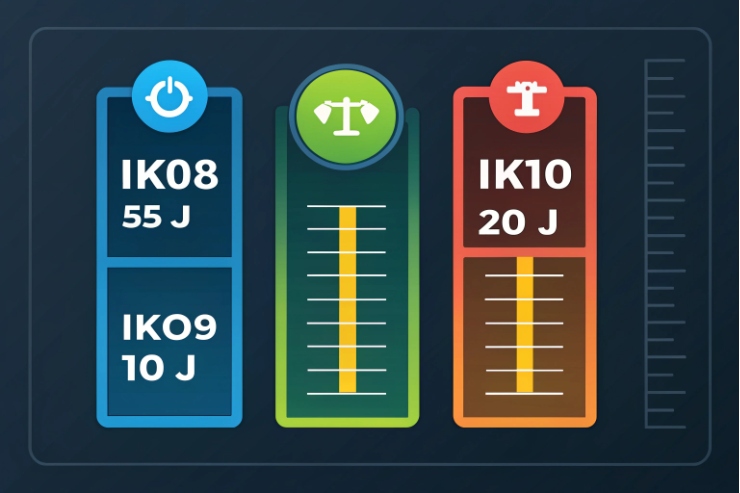
For explosion-proof telephones, IK08 (5 J), IK09 (10 J), and IK10 (20 J) are the most common targets. IK10 is usually chosen for public access and vandal-prone areas under IEC 62262.
The Joule values that purchasing teams need
IEC 62262 links each IK code to a defined impact energy. The impact energy is measured in Joules (J). In simple terms, higher Joules means a harder hit under controlled conditions.
| IK code | Impact energy | Typical meaning on site | Common Ex phone use |
|---|---|---|---|
| IK08 | 5 J | Strong accidental impact | Outdoor process areas with limited public access |
| IK09 | 10 J | Heavy knocks and tool bumps | Most plant installations and exposed corridors |
| IK10 | 20 J | Vandal-level impact | Tunnels, vandal-prone areas 3, prisons, offshore walkways |
The jump from IK09 to IK10 is not small. It can change housing thickness, weight, and how keypads are built. It can also change mounting requirements, because a heavier and stiffer housing transfers impact into bolts and wall anchors.
How do enclosure materials and design—316L, GRP, cast aluminum, and wall thickness—affect IK rating and durability?
Many teams focus only on “metal vs plastic.” The real story is geometry, thickness, and how forces travel through the face and into the mount.
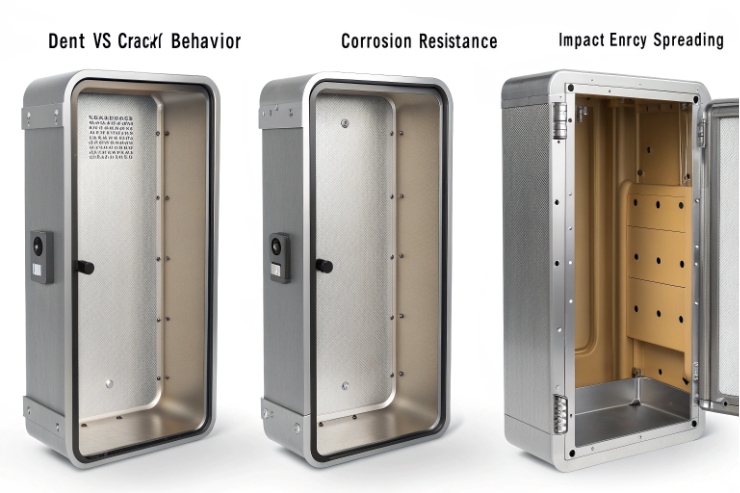
316L stainless, cast aluminum, and engineered GRP can all achieve high IK ratings, but the rating depends on wall thickness, rib design, corner protection, and weak zones like windows and keypads. Material choice also affects corrosion and long-term fatigue.
316L stainless steel: strong and stable, but heavier
316L stainless steel 4 is popular in offshore and chemical areas because it resists corrosion well. It also offers strong puncture resistance and stable stiffness. For IK rating, stainless helps most when:
- the faceplate is thick enough
- the corners are protected and not sharp
- the keypad is recessed or supported by a metal carrier
Cast aluminum: strong for impact, but needs corrosion planning
Cast aluminum housings are common for flameproof designs because they allow thick walls and complex shapes. Thick cast sections can absorb and spread impact energy well. For IK10 targets, cast aluminum often performs strongly in the housing body.
What test methods and certification evidence confirm IK rating—accredited lab reports, third-party marks, and combined IP66/67 performance?
Many products claim an IK code without showing proof. That causes disputes during FAT, and it slows approvals with EPC teams.
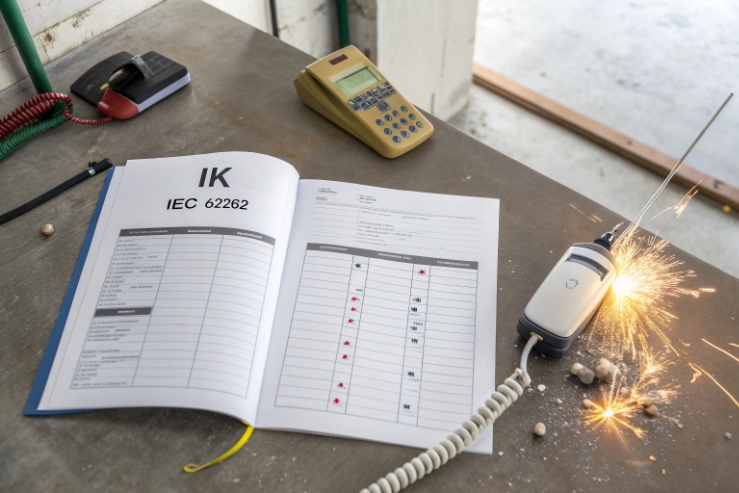
A credible IK claim is backed by an accredited lab report that states IEC 62262 test conditions, impact energies, strike points, and pass criteria. Strong evidence also includes post-impact functional checks and IP66/67 re-checks to prove sealing still holds.
What a solid IK test report should contain
A report must let another lab repeat the test. It must also show the weak-point strategy. In purchasing, these are the pages that matter:
- product model and configuration, with photos
- standard and edition used (IEC 62262)
- IK code claimed and the exact Joule energy applied
- strike points and number of impacts per point
- test orientation and support method
- pass/fail criteria and results
- pre-test and post-test functional checks
For an explosion-proof telephone, functional checks should include calling, audio, keypad input, hook operation, and indicators. Impact damage that does not stop function still matters if it creates sharp edges or compromises sealing.
Accredited lab and third-party marks
An accredited lab 5 that is accredited to ISO/IEC 17025 is often expected for acceptance. Many buyers also prefer third-party marks or certification listings. IK itself is usually not part of ATEX or IECEx certificates. It is a separate performance claim.
Does mounting hardware and anti-vandal keypad design influence real-world impact resistance in prisons, tunnels, and offshore sites?
Many failures that look like “low IK” are actually mounting failures. The phone survives, but it rips from the wall, or the cable gland is pulled, or the keypad collapses under repeated hits.
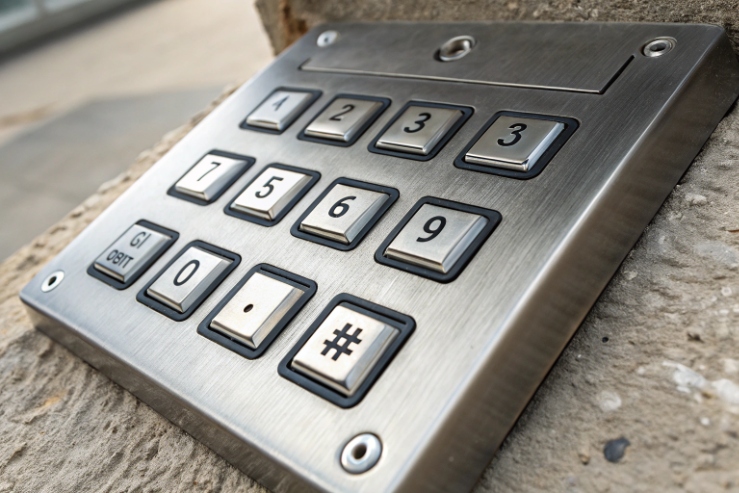
Yes. Mounting hardware and keypad design can decide real-world impact resistance more than the housing material. Strong wall anchors, anti-loosening methods, strain relief, and stainless anti-vandal keypads often matter more than the claimed IK code in prisons, tunnels, and offshore sites.
IEC 62262 impacts are applied to the enclosure. But the real world adds lever forces and repeated abuse. If the mounting hardware 6 flexes, impact energy turns into bending at the bolt line. Over time, that leads to:
- loosened fasteners
- elongated holes in brackets
- cracked GRP around inserts
- gasket line distortion from housing shift
Anti-vandal keypad design is often the real weak point
In prisons and tunnels, the keypad is the first target. “Soft rubber keypad” designs fail quickly in those zones. An Anti-vandal keypad 7 design often uses stainless steel mechanical buttons with a strong carrier plate.
The keypad also affects sealing. A keypad that deforms can open micro-gaps that later become water ingress after washdown.
Conclusion
IK10 is achievable for many Ex phones, but only with strong keypad zones and reinforced mounting. For project support, contact Jason Mark at info@sipintercommanufacturer.com or www.sipintercommanufacturer.com.
Footnotes
-
Overview of the international standard IEC 62262 for classifying degrees of protection against mechanical impacts. ↩ ↩
-
Understanding safety certifications and design requirements for communication equipment used in potentially explosive industrial atmospheres. ↩ ↩
-
Technical considerations for designing enclosures and interfaces that withstand intentional damage in high-risk public or industrial environments. ↩ ↩
-
Detailed properties of 316L stainless steel, focusing on its exceptional corrosion resistance in marine and chemical environments. ↩ ↩
-
Information regarding ISO/IEC 17025 requirements for testing and calibration laboratories to ensure consistent technical competence. ↩ ↩
-
Engineering basics of choosing correct fasteners and hardware to ensure structural integrity and vibration resistance in assemblies. ↩ ↩
-
Design features of vandal-resistant keypads used in high-traffic and harsh environments to prevent mechanical failure or tampering. ↩ ↩








