
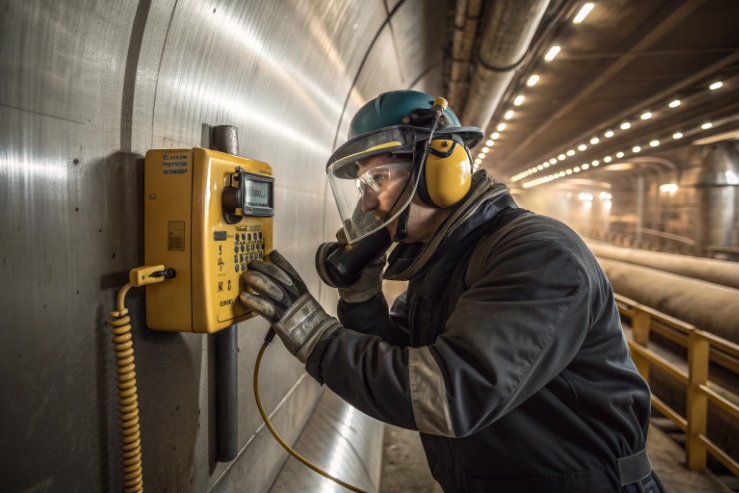
Hands-free sounds simple, but hazardous-area reality makes it tricky. Many projects buy “speakerphone” units that work in a quiet lab and fail on site.
Yes, an explosion-proof telephone can support hands-free calling, including full-duplex speakerphone, if the device audio DSP and the site mounting, SIP features, and PoE/IP design are specified as a complete system.
Hands-free on Ex phones: what “supported” really means
Hands-free calling in Zone 1/2 1 is not only a checkbox feature. It is a contract between acoustics, DSP, and power. A phone can be certified Ex d or Ex e and still sound poor if the speaker cannot reach the required SPL at the user location, or if echo control collapses in a reflective steel bay. Hands-free also changes how people use the device. Users step back, speak off-axis, and speak through PPE. That shifts the microphone requirement and raises the need for stable AGC and noise suppression.
A strong hands-free design begins with measurable targets. The most useful targets are: speaker SPL at 1 m with a defined test method, AEC behavior under double-talk, and transmit clarity in a known noise bed. In projects where paging is part of the scope, intelligibility metrics like STI 2 are more honest than one loudness number. It is also important to define the operating mode. Many sites expect “auto-answer talkback” or “paging + talk” behavior. That requires SIP features that behave safely, like auto-answer with whitelisting, priority rules, and clear multicast handling.
Power and enclosure design also matter. Higher speaker output and active DSP increase power draw and heat. In sealed IP66/67 housings, extra heat is not free. If a heater is also required for cold-start, the PoE budget needs real headroom or a defined duty cycle. The best deployments keep the phone stable at maximum ambient temperature while the speaker runs at maximum safe volume.
Hands-free requirement quick map
| System item | What to specify | Why it matters in Zone 1/2 |
|---|---|---|
| Loudness | SPL @ 1 m, on-axis, dB(A) and test signal | Predicts real audibility |
| Echo control | ERLE, tail length, double-talk behavior | Keeps full-duplex usable |
| Noise handling | AGC + noise suppression limits | Improves far-end intelligibility |
| SIP behavior | Auto-answer, paging, multicast rules | Makes hands-free predictable |
| Power + heat | PoE type/class, accessory loads, thermal derating | Prevents resets and overheating |
| Enclosure | IP66/67 and gasket stability | Keeps audio stable over time |
Many clients ask one question: “Will it work in our plant?” The most reliable answer comes from a short on-site/D site test plan with the correct mounting and the correct noise conditions, not from a brochure.
Hands-free can be excellent in hazardous areas, but only when audio targets and network behavior are written into the spec.
Is full-duplex speakerphone available with specified SPL, AEC, and noise suppression?
Hands-free is often advertised, but full-duplex is where weak designs show up. A phone that mutes one side feels broken in emergencies.
A full-duplex speakerphone is possible on explosion-proof telephones when the unit has a real AEC pipeline, controlled AGC, and measured SPL output at 1 m, plus a limiter to prevent clipping and feedback.
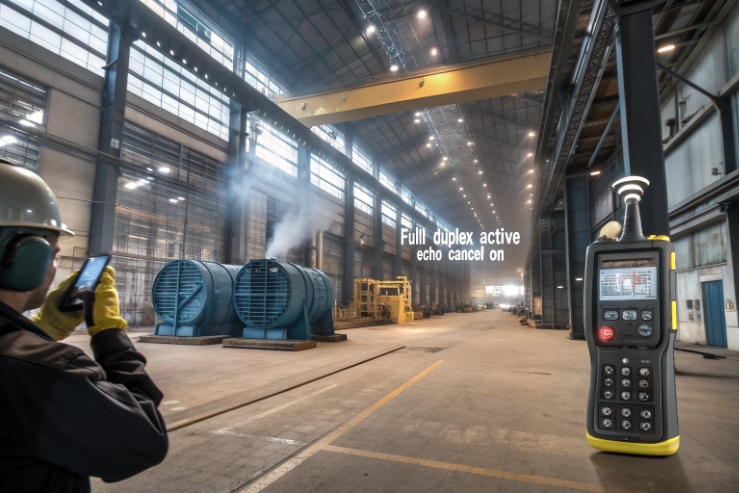
What “full-duplex” should mean in your tender
Full-duplex means both sides can speak at the same time without the device chopping speech. Many products claim “hands-free” but behave like half-duplex in noise. That behavior usually comes from weak echo cancellation, unstable double-talk handling, or aggressive non-linear suppression that ducks near-end speech.
A good procurement spec should force clarity by asking for:
- Speaker SPL at 1 m with dB(A) weighting, test tone or speech-shaped noise, and the volume setting used.
- AEC behavior 3 with ERLE over time and a minimum tail length that matches reflective spaces.
- Noise suppression described as transmit-side suppression, not only “noise reduction.”
- Limiter/clipping control so max SPL remains intelligible and does not cause howling.
On industrial sites, the far end usually cares more about the transmit path than the receive path. A loud full-duplex speakerphone 4 is helpful, but a clean transmit microphone path is what stops repeat-backs and misunderstandings.
A practical “audio DSP stack” to request
| DSP block | Minimum request | Field benefit |
|---|---|---|
| AEC | Double-talk stable, tail length stated | Prevents echo and talkback issues |
| Noise suppression | Transmit NS with moderate settings | Reduces fan and pump noise |
| AGC | Max gain limit + stable timing | Avoids pumping and overload |
| Limiter | Defined threshold | Prevents clipping and howling |
In my project reviews, the fastest proof is a scripted double-talk test in the worst reflective area at max allowed volume. If the phone stays stable there, it will usually perform well everywhere else.
What mounting and mic–speaker design ensure intelligibility for hands-free use in Zone 1/2?
A strong AEC can still fail if the mounting creates a harsh echo path. Steel walls, corners, and vibrating brackets can defeat good DSP.
Hands-free intelligibility improves when the phone is mounted at speaking height, avoids corners and strong reflections, and uses a mic–speaker geometry that reduces direct coupling while maintaining a clear speech-band response through sealed ports and stable gaskets.
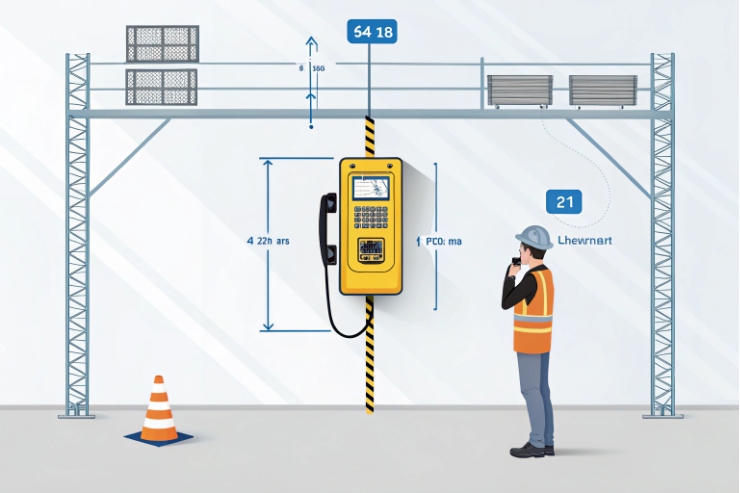
Mounting rules that actually work on site
Hands-free works best when the user’s mouth is in the expected pickup zone. If the phone is too high, the user speaks upward and off-axis. If the phone is in a corner, reflections build and echo tail grows. If the phone is on a vibrating frame, the mic picks up mechanical noise and the echo path changes over time.
Simple mounting guidance that reduces risk:
- Mount the mic near mouth height for the expected user.
- Keep the device away from corners and deep recesses when possible.
- Avoid mounting directly on thin vibrating panels without damping.
- Aim the speaker grille toward the user zone, not toward a reflective wall.
Mic and speaker details that matter in sealed Ex housings
Explosion-proof and weatherproof construction adds constraints:
- Mic ports often use membranes for IP66/67. Those membranes can reduce high-frequency detail if not chosen correctly.
- Speaker chambers can create resonances. Resonances can cause harshness and feedback peaks.
- Gasket compression and grille stiffness affect vibration. Vibration changes echo stability.
A robust design uses stable gasket compression, a stiff front assembly, and controlled acoustic venting that maintains IP rating while avoiding whistle paths.
A mounting + design checklist
| Item | Target | Why it helps |
|---|---|---|
| Mount height | Mouth zone alignment | Better SNR at the mic |
| Placement | Avoid corners | Shorter echo tail |
| Bracket | Rigid + damped | Less vibration noise |
| Mic port | Speech-band clarity | Better intelligibility |
| Gaskets | Stable compression | Stable echo path over years |
When the site is extremely noisy, hands-free still works best when the user stands close. If the workflow needs stand-off talkback, a horn speaker or distributed paging becomes the safer architecture.
How do SIP features—auto-answer, paging, priority, and multicast—operate in hands-free mode?
Hands-free changes call control expectations. A normal ring-and-answer flow is too slow for some safety workflows. Auto-answer can also create security risk if it is not controlled.
Hands-free mode can work well with SIP auto-answer, paging, priority, and multicast when the phone supports whitelisting, safe auto-answer rules, and clear paging profiles that keep audio stable and intelligible under load.
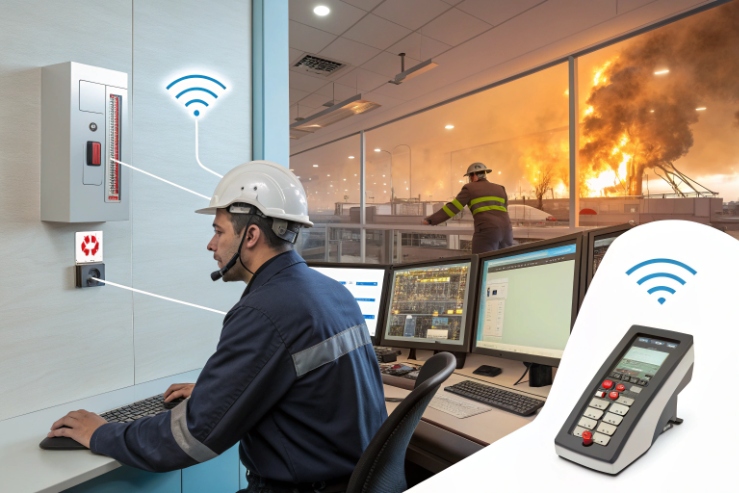
Auto-answer that is safe for hazardous sites
Auto-answer 5 is useful for dispatch-to-field talkback, gate or access intercom flows, and emergency supervision calls.
Auto-answer must be controlled. A safe implementation includes:
- whitelist by SIP account or caller ID pattern
- “auto-answer only for paging line” behavior
- audible local indication when auto-answer is active
- a defined timeout and an easy local override
Paging and multicast: keep it predictable
Paging can be unicast or multicast. Multicast 6 handling reduces server load but requires correct switch IGMP behavior. Hands-free paging also needs stable audio processing.
Priority features matter in emergency workflows. A phone should be able to:
- accept priority calls that override normal calls
- reject low-priority calls during emergency mode
- keep relay I/O behavior deterministic during paging
A SIP feature table for hands-free deployments
| SIP feature | What to specify | Why it matters |
|---|---|---|
| Auto-answer | Whitelist + mode-specific rule | Prevents abuse and surprises |
| Paging | Dedicated paging line/profile | Stable audio behavior |
| Multicast | IGMP design assumptions stated | Prevents flooding and drops |
| Priority | Override policy and indicators | Keeps emergency flows reliable |
Hands-free success is higher when call control is simple. The phone should have one clear “talkback” behavior that operators can trust, even when the network is busy.
What power and enclosure factors—PoE class, heaters, IP66/67—impact hands-free reliability in hazardous areas?
A hands-free phone can sound great and still reboot if PoE headroom is tight. Encrypted SIP, active DSP, loud audio, and heaters all compete for power and thermal margin.
Hands-free reliability depends on PoE budget and thermal margin inside the sealed Ex enclosure. Higher speaker output and heaters increase both power draw and heat, so the design must match PoE type/class, ambient limits, and IP66/67 sealing stability.
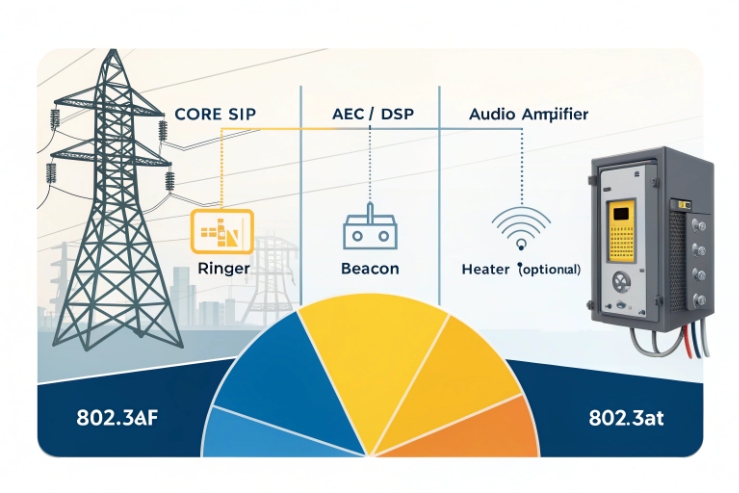
PoE planning: focus on worst-case mode
A realistic worst-case mode includes:
- max hands-free volume duty cycle
- AEC + noise suppression active
- beacon or strobe active if fitted
- relays energized if used
- cold-start heater duty if required
If a project uses PoE, it is safer to specify the delivered PoE type/class 7 at the device end, not only the switch rating. A margin prevents resets during audio peaks.
Heater and cold-start: define the operating model
Heaters are valuable in sub-zero sites, but they complicate:
- PoE budget
- internal temperature rise
- duty cycles and thermal derating
If the phone must operate in extreme cold, define whether the heater is always-on, thermostat controlled, or only used for cold-start. Then tie that to the PoE budget.
IP66/67 and audio stability
Sealing is not only about water. It also affects audio:
- gasket aging can change the acoustic path
- membranes can clog or stiffen
- pressure changes can stress seals
A robust design uses stable gasket materials and consistent compression so the mic and speaker behavior does not drift after years.
A power + enclosure checklist
| Factor | What to specify | Failure it prevents |
|---|---|---|
| PoE type | 802.3af/at/bt as needed | Brownouts and resets |
| Peak load | Worst-case audio + accessories | Surprise reboots during paging |
| Thermal | Max ambient with max volume | Overheat shutdown |
| Heater | Duty cycle and power model | Cold-start failures |
| IP66/67 | Gasket and membrane stability | Water ingress and audio drift |
In hazardous areas, uptime is part of safety. The safest architecture is usually PoE from a UPS-backed switch, plus surge protection and clean bonding, so the phone stays stable during storms and switching events.
Conclusion
Yes, hands-free calling is possible on explosion-proof telephones when audio DSP, mounting acoustics, SIP behavior, and PoE/IP thermal limits are specified and verified as one system.
Footnotes
-
Learn more about IECEx standards for classification of hazardous areas like Zone 1 and Zone 2. [^1] ↩
-
The Speech Transmission Index (STI) measures how intelligible speech is within a specific acoustic environment. [^3] ↩
-
Acoustic Echo Cancellation (AEC) is vital for removing feedback loops in industrial hands-free communication devices. [^2] ↩
-
Full-duplex technology allows simultaneous two-way audio transmission without signal cutting or interruption. [^4] ↩
-
SIP protocols manage session initiation and control for features like auto-answer in VoIP systems. [^5] ↩
-
IP Multicast protocols optimize network traffic for broadcasting paging messages to multiple endpoints simultaneously. [^6] ↩
-
Power over Ethernet standards define the delivery of power and data over standard network cabling. [^7] ↩








