
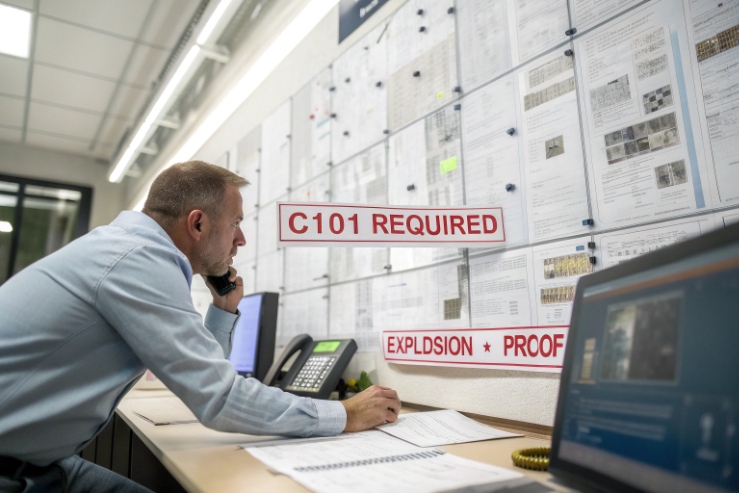
For industrial operators in North America, "Class I, Division 1" is the heavyweight champion of safety standards. It represents the most hazardous environments 1 where explosive gases are present during normal operations. Finding communication gear that survives this rigorous standard—without compromising on modern features like VoIP—can feel like searching for a unicorn.
Yes, specialized explosion-proof telephones utilize heavy-duty cast aluminum enclosures or intrinsically safe circuits to fully support Class I, Division 1 (C1D1) environments, ensuring safe communication in the most volatile areas of US and Canadian facilities.
Dive Deeper: The Gold Standard of North American Safety
In my dealings with US-based EPCs (Engineering, Procurement, and Construction firms), I have learned that you cannot just "adapt" a European phone for the US market. The philosophy is different.
What is Class I, Division 1?
Under the National Electrical Code (NEC) 2 Article 500:
-
Class I: Flammable Gases or Vapors.
-
Division 1: The hazard is present continuously, intermittently, or periodically under normal operating conditions.
- Note: This is a critical distinction. In the IEC/ATEX world, this covers both Zone 0 (continuous) and Zone 1 (likely). Because C1D1 covers the "worst-case" Zone 0 scenario, the equipment requirements are incredibly high.
The Design Philosophy:
To survive C1D1, manufacturers like DJSlink typically use the "Explosion-Proof" method (similar to Ex d). We build a box so strong that if gas gets in and explodes, the box contains the pressure. The hot gas escapes through precision-machined joints (flame paths) that cool it down below the ignition point of the outside atmosphere.
What certifications prove a SIP telephone is compliant for Class I, Division 1?
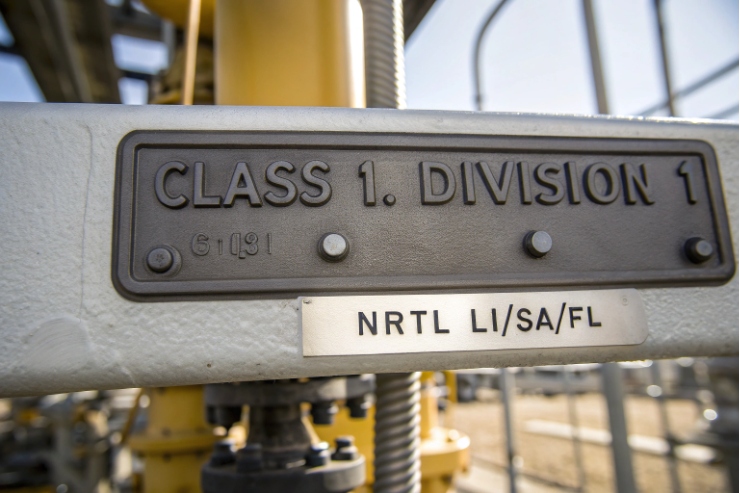
A sticker saying "Explosion Proof" is not enough. In the US and Canada, the legal liability is immense. You need proof from a Nationally Recognized Testing Laboratory (NRTL) 3.
To be legally installed in a C1D1 area, a SIP telephone must bear the mark of an NRTL like UL (Underwriters Laboratories), CSA (Canadian Standards Association), or FM Approvals, explicitly listing compliance with standards like UL 1203 (Explosion-Proof) or UL 913 (Intrinsic Safety).
Dive Deeper: The Documents You Need
When I submit a bid for a project in Texas or Alberta, I have to provide the "Control Drawing" and the certificate. Here is what to look for:
1. The Mark
-
Underwriters Laboratories (UL) 4 Listed: The most common in the USA.
-
CSA: The standard for Canada.
-
cULus: A combined mark accepted in both countries.
-
FM: FM Global is an insurance carrier that also certifies equipment. Their standards are extremely high because they are the ones paying out if the plant blows up.
2. The Standards
-
UL 1203: "Explosion-Proof and Dust-Ignition-Proof Electrical Equipment." This tests if the enclosure can withstand the hydrostatic pressure of an internal explosion (often 4x the expected pressure).
-
UL 913: "Intrinsically Safe Apparatus." If the phone claims to be "Intrinsically Safe" (unable to release enough energy to spark), it must pass this.
-
CSA C22.2 No. 30: The Canadian equivalent for explosion-proof enclosures.
My Advice:
Never accept a "Manufacturer’s Declaration of Conformity" for C1D1. Unlike ATEX Zone 2, self-declaration is not valid here. If it doesn’t have the UL/CSA/FM holographic label, do not install it.
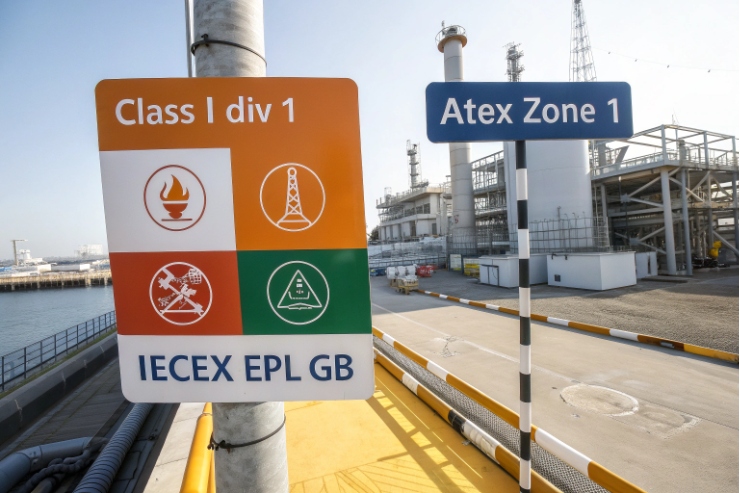
How do C1D1, ATEX Zone 1, and IECEx requirements differ for hazardous-area phones?
This is the source of endless confusion for global procurement teams. Is C1D1 better than Zone 1? Are they interchangeable? This applies to hazardous-area phones 5.
While both standards ensure safety, C1D1 is a broader and often stricter classification that encompasses both ATEX Zone 0 and Zone 1, requiring rigid conduit installation and specific flame path designs that differ from the cable-gland-focused European approach.
Dive Deeper: The Culture Clash of Safety
1. The Scope Difference
-
ATEX/IECEx: Splits the danger into Zone 0 (Continuous) and Zone 1 (Likely).
-
NEC (Class/Div): Combines them into Division 1.
- Result: A device built for C1D1 is theoretically safe for Zone 0, making it extremely robust. However, most industrial C1D1 phones are essentially "Zone 1 level" devices that have been tested to the rigorous Division 1 standard.
2. The Installation Culture
-
Europe (ATEX): We love Cable Glands. You run a flexible cable to the phone, tighten the gland, and you are done. It is fast and flexible.
-
North America (C1D1): They love Rigid Metal Conduit. You run the wires inside a steel pipe. Within 18 inches of the phone, you must pour a "Conduit Seal" (a potting compound) to physically block gas from traveling through the pipe.
- Impact: You cannot easily swap a C1D1 phone. You have to break the seal and unscrew the pipe. It is permanent.
3. The "Zone" Adoption in the US
The US is slowly adopting Article 505 (Class I, Zone 1). This allows for IEC-style methods (like cable glands) if the facility is classified using Zones. But for legacy "Division" facilities (90% of the market), you are stuck with conduit and heavy iron boxes.
Which enclosure, temperature code, and ingress rating are required for a C1D1 industrial phone?
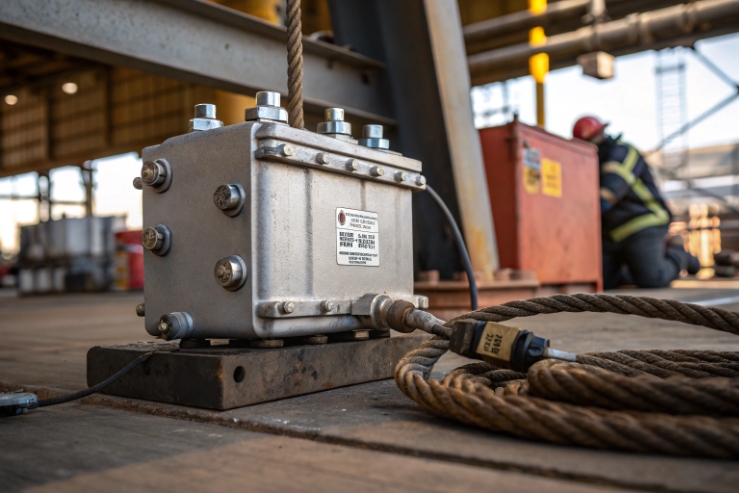
To survive in a C1D1 environment, the industrial phone 6 physical body must be a fortress.
A C1D1 phone typically requires a copper-free cast aluminum enclosure (NEMA 7/4X) to prevent sparking, a Temperature Code (T-Code) typically T6 or T5 to stay below gas ignition thresholds, and NEMA-rated sealing to withstand rain and dust.
Dive Deeper: The Hardware Specs
1. The Enclosure: NEMA 7 (Explosion-Proof)
In the IEC world, we say "Ex d." In the NEMA world, we say "NEMA 7."
This is a cast enclosure designed to contain an explosion.
- Copper-Free Aluminum: Standard aluminum contains copper. In the presence of acetylene, copper can form acetylides, which are shock-sensitive explosives. C1D1 enclosures must be "Copper-Free" (<0.4%) to prevent this.
2. NEMA vs. IP Ratings
The US uses NEMA (National Electrical Manufacturers Association) ratings instead of IP.
-
NEMA 4X: Roughly equivalent to IP66. It means the enclosure is watertight (hose-directed water), dust-tight, and corrosion-resistant.
-
Why 4X? If you are on an oil rig in the Gulf of Mexico, saltwater is the enemy. NEMA 4X ensures the hinges and latches won’t rust shut.
3. The T-Code (Temperature)
This is critical.
-
T6 (85°C): The safest. Safe for Carbon Disulfide.
-
T3 (200°C): Dangerous for many gases.
-
Observation: Many older US phones are only T3 or T4 because they use heavy transformers that get hot. Modern SIP phones from DJSlink use efficient switching power supplies, allowing us to achieve T5 or T6 easily.
What installation and power options (PoE, analog) are allowed for C1D1 field deployments?
Powering a device in a Division 1 area is the biggest engineering challenge. You cannot just plug it into a wall socket.
C1D1 deployments support both Analog (telephone line powered) and VoIP (PoE powered) options, but all wiring must be run through sealed rigid conduit or utilize Intrinsically Safe (IS) barriers to limit energy delivered to the hazardous area.
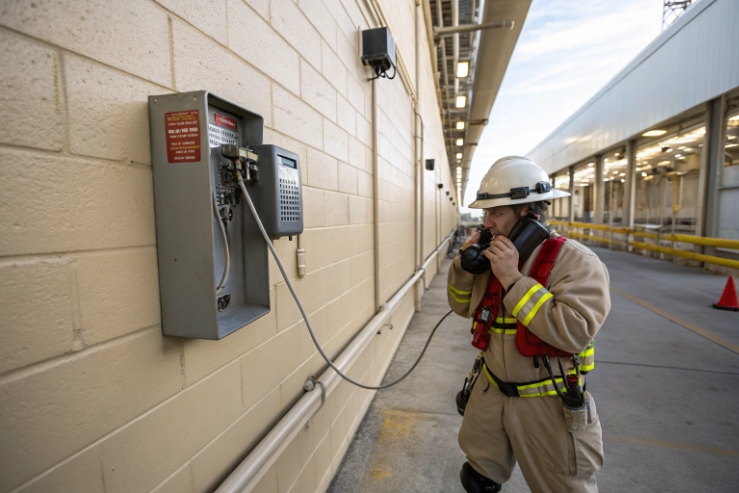
Dive Deeper: Powering the Beast
1. The Conduit Requirement
This is the dealbreaker for many installers.
-
Wiring: You must pull individual wires (THHN/THWN) through the steel pipe.
-
Seal-Offs: You must install a sealing fitting (EYS) within 18 inches of the phone. This prevents the conduit system from acting like a gas pipe, moving explosive vapors from the danger zone into the safe control room.
2. PoE (Power over Ethernet) in C1D1
-
The Problem: Ethernet cables are fragile. You cannot pull a pre-terminated RJ45 connector through a conduit seal.
-
The Solution: We provide C1D1 phones with terminal blocks, not RJ45 jacks. You cut the Ethernet cable, strip the pairs, and punch them down inside the explosion-proof chamber.
-
IS Ethernet: For "Intrinsically Safe" phones (rare for VoIP due to power needs), you would need an "Ex i Isolator" in the safe area. This is complex and expensive. Most C1D1 VoIP phones 7 use the "Explosion-Proof Enclosure" method, which allows standard PoE (802.3af) as long as it’s inside the conduit.
3. Analog vs. VoIP
-
Analog: Simple 2-wire connection. Still popular for emergency "Red Phones" because they don’t need network switches.
-
VoIP/SIP: growing fast. The advantage is monitoring. A C1D1 SIP phone can report its status ("I am online," "My handset is broken") to the control center. In a safety-critical environment, this self-diagnostic is invaluable.
Conclusion
Class I, Division 1 is not just a certification; it is a commitment to absolute safety integrity. While the installation with rigid conduit and seals is more labor-intensive than the European method, it provides a level of mechanical protection that is unmatched, ensuring your communication link survives even when the environment becomes hostile.
Footnotes
-
Comprehensive OSHA guide on identifying and classifying hazardous locations in industrial settings for worker safety. ↩ ↩
-
The official NFPA 70 standard for safe electrical design, installation, and inspection in the United States. ↩ ↩
-
Learn how NRTLs provide independent safety testing and certification for equipment used in dangerous environments. ↩ ↩
-
UL’s global safety certification services ensure products meet rigorous standards for performance and hazard containment. ↩ ↩
-
Explore a wide range of specialized communication devices designed for maximum safety in volatile atmospheres. ↩ ↩
-
Heavy-duty communication equipment built to withstand extreme temperatures and physical stress in industrial work zones. ↩ ↩
-
Advanced communication devices that leverage internet protocols to provide enhanced reliability and remote monitoring capabilities. ↩ ↩








