
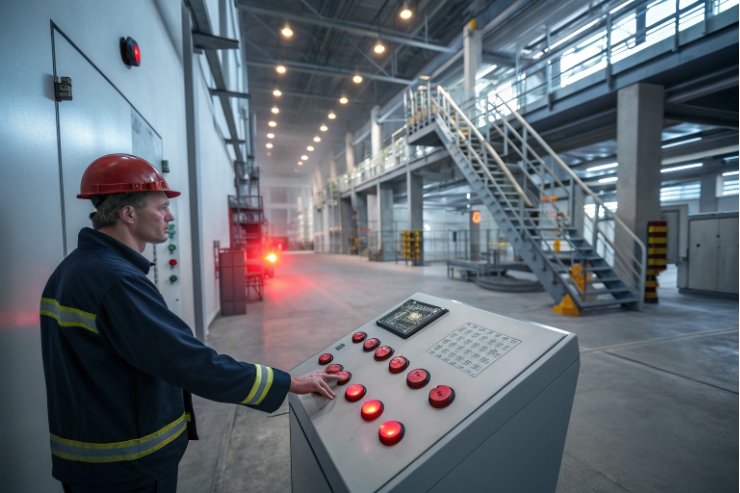
Imagine standing on the drill floor of an offshore oil rig. The noise is deafening—engines roaring, metal clanging, wind howling. Suddenly, a gas sensor detects a leak. How do you warn the 200 crew members instantly, regardless of where they are or what they are doing? You don’t use a walkie-talkie. You rely on the PAGA system.
A Public Address and General Alarm (PAGA) system is a critical, regulated life-safety communication network designed to broadcast voice messages and emergency alarm tones across industrial facilities, ensuring that every person can hear and understand instructions even in high-noise hazardous environments.
Dive Deeper: More Than Just a Loudspeaker
I often have to correct a dangerous misconception with my clients: A PAGA system is not just a "loud PA system" like you would find in an airport or a stadium. It is a completely different beast, engineered for survival.
In the industrial world, specifically in Oil & Gas and Power Generation, PAGA is "System Critical." If the office phone system goes down, it is an annoyance. If the PAGA system goes down, you are likely violating international safety laws (like SOLAS or IMO regulations 1) and putting lives at risk.
The "PA" and the "GA"
-
Public Address (PA): This is the voice component. It allows operators in the control room (or via SIP phones) to make announcements. "Crane operation starting on Deck B," or "Mr. Smith to the drilling supervisor."
-
General Alarm (GA): This is the automated safety component. It generates standardized alarm tones—PAPA (Prepare to Abandon Platform), Toxic Gas Alert, Fire Alarm. These are not MP3 files played from a PC; they are generated by hardened DSP chips 2 that must work even if the control room is on fire.
The Survival Mindset
When we design PAGA solutions at DJSlink, we assume the worst-case scenario. The system must operate during a power outage (via UPS batteries). It must operate if a cable is cut (via loop redundancy). It must operate if one amplifier blows up (via N+1 backup). It is the last line of defense when everything else has failed.
How does a PAGA system structure zones, priorities, and fail-safe redundancy for industrial sites?
A PAGA system is like a military command structure. It needs strict organization to ensure the right message gets to the right people without chaos.
PAGA systems are architected around three pillars: "Zones" to target specific areas, "Priority Levels" to ensure emergency alarms override casual talk, and "A/B Redundancy" to guarantee coverage even if half the hardware fails.
Dive Deeper: The Architecture of Safety
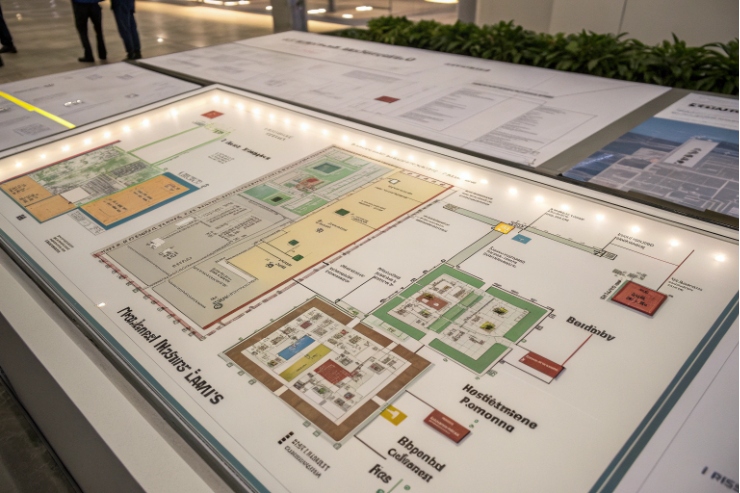
1. Zoning: Precision Communication
You don’t want to wake up the night shift crew in the living quarters just to announce a maintenance check in the engine room. We divide a facility into logical Zones.
-
Process Areas: High noise, requires maximum volume.
-
Living Quarters: Low noise, requires softer volume and "muting" capabilities during sleep hours (unless it’s a general alarm).
-
Drill Floor / Deck: Hazardous zones requiring explosion-proof gear.
The central controller manages these zones. I can press a button to page "All Zones" (Total Recall) or just "Zone 3" (Compressor Room).
2. Priorities: The Hierarchy of Sound
What happens if someone is making a routine announcement and a fire breaks out? The system must instantly cut off the voice and blast the alarm. We program a strict priority list:
-
General Emergency Alarm (HIGHEST): Mutes everything else.
-
Fire / Gas Alarms: Specific emergency tones.
-
Emergency Voice Message: "Evacuate now."
-
Operational Voice Paging: "Maintenance team to pump room."
-
Background Music (LOWEST): Rarely used in heavy industry, but possible.
3. Fail-Safe Redundancy: The A/B Loop Concept
This is the industry standard for high-reliability sites. We never wire all speakers in a room to a single cable.
-
The A-Loop: Feeds 50% of the speakers (e.g., speakers 1, 3, 5).
-
The B-Loop: Feeds the other 50% (e.g., speakers 2, 4, 6).
These loops run on different physical cable paths and often connect to different amplifiers.
The result: If a forklift severs the "A" cable, or if the "A" amplifier rack loses power, the "B" speakers keep working. The volume drops by 3dB (which is noticeable but acceptable), but the message is still audible. Total silence is never an option.
A PAGA system isolated from the rest of the plant is useless. It needs to be the central nervous system, reacting to inputs from everywhere.
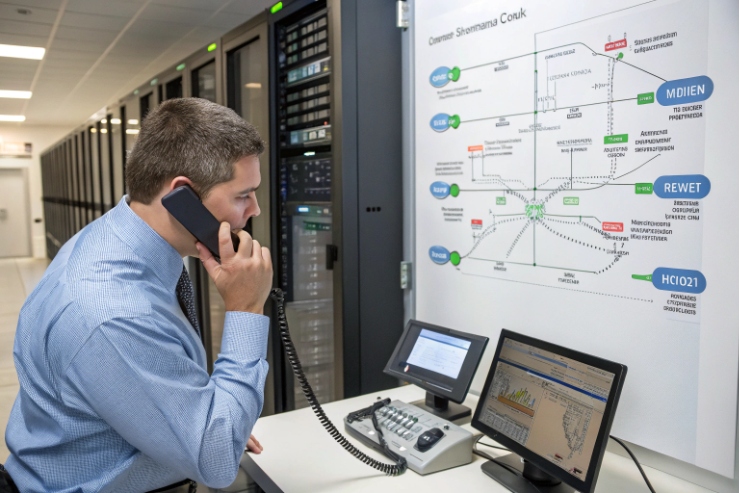
Modern PAGA systems act as an integration hub, connecting via SIP to the telephone system for remote paging, via dry contacts to Fire & Gas panels for auto-alarms, and via Modbus/TCP to DCS systems for process automation.
Dive Deeper: The Connectivity Ecosystem
At DJSlink, we are seeing a massive shift from old analog cabling to IP-based integration. Here is how the modern PAGA ecosystem connects:
1. PBX / SIP Integration (The Voice Link)
In the past, you needed a dedicated "Paging Microphone" on your desk. Now, we integrate the PAGA controller directly with your IP-PBX 3 (Asterisk, Cisco, Avaya).
-
How it works: Any authorized staff member can pick up their standard office phone or an explosion-proof field phone, dial a code (e.g., *99), and their voice is broadcast over the loudspeakers.
-
Security: We secure this with PIN codes so a random contractor can’t accidentally announce a false alarm to the whole rig.
2. Fire & Gas (F&G) Panel Integration (The Safety Link)
This is a hardwired connection for reliability. The Fire Panel and the PAGA controller are connected via supervised "dry contacts" or I/O modules.
- Scenario: A gas detector trips in Zone 4. The Fire Panel closes a relay. The PAGA system detects this closure and instantly triggers the stored "Toxic Gas Alarm" tone in Zone 4 and adjacent zones. No human intervention is needed. This split-second automation saves lives.
3. DCS / SCADA (The Process Link)
The Distributed Control System 4 (DCS) manages the machinery. We connect PAGA to it, usually via industrial protocols like Modbus TCP/IP.
- Usage: If a turbine starts up, the DCS can tell the PAGA system to play a pre-recorded warning message ("Caution: Turbine Start Sequence Initiating") to warn workers nearby.
4. Emergency Access Points
We also install physical break-glass call points or "Access Panels" in the field. These are distinct from fire alarms. They allow a field operator to trigger a specific PAGA routine manually if they see a danger that the sensors missed (like a man overboard).
What speaker and amplifier choices fit hazardous areas—explosion-proof horns, IP66/IP67, constant-voltage lines, and A/B backup?
You cannot put a home stereo speaker on an oil rig. It would corrode in a week or ignite a gas explosion. The hardware must be military-grade.
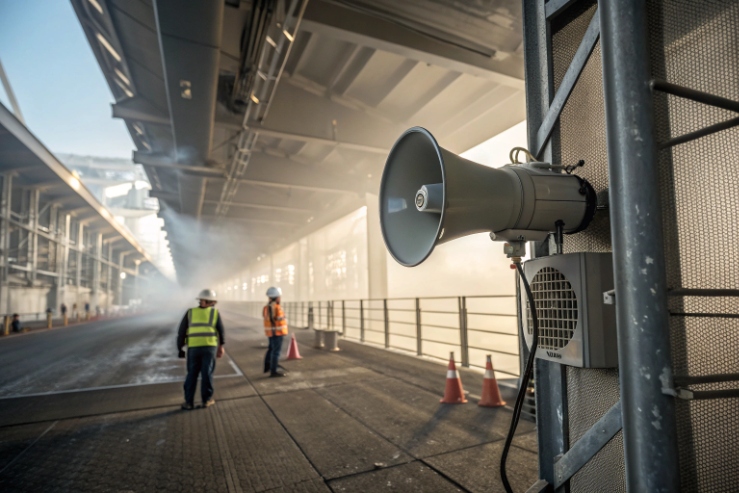
Hazardous area PAGA hardware relies on Ex d (Flameproof) horn speakers for Zone 1, IP66/67 ratings for saltwater protection, and 100V constant-voltage transmission lines to drive audio over kilometers of cabling without signal loss.
Dive Deeper: Hardware Built for Hell
1. The Speakers: Ex d Horns
In Zone 1 and Zone 2 areas (where gas is present), we use Ex d (Flameproof) horn speakers.
-
Material: Usually Glass Reinforced Polyester (GRP) or Stainless Steel 316. We avoid aluminum in offshore environments because salt spray eats it alive. GRP is fantastic—it is anti-static, UV resistant, and doesn’t corrode.
-
Design: The "driver" (the part that makes sound) is sealed inside a heavy flameproof chamber. Even if the coil burns out and sparks, the explosion stays inside.
-
Power: Typically 15W to 25W. This sounds low compared to a 1000W home sub, but horn speakers are incredibly efficient. A 15W horn can produce 118dB—loud enough to hurt your ears.
2. The Amplifiers: Class D and 100V Lines
Industrial sites are huge. Running a thick copper speaker wire 2km to a speaker would result in massive power loss.
-
The Solution: We use 100V (or 70V) Constant Voltage lines. It works like the electricity grid. We step up the voltage at the amplifier, transmit it over thin cables, and step it down at the speaker using a transformer. This allows us to daisy-chain 20 speakers on a single cable run of 1km with minimal loss.
-
Efficiency: We use Class D amplifiers 5. They run cool and are energy efficient, which is vital when you are running on UPS battery backup during a blackout.
3. Flashing Beacons
In high-noise areas (machinery rooms > 85dB), a loudspeaker is not enough. You legally need a visual indicator. We install Ex d Xenon Beacons (usually varied colors: Red for Fire, Yellow for Toxic Gas). The PAGA controller powers these beacons in sync with the alarm tones.
How are paging intelligibility, line supervision, and power sizing calculated for oil, gas, and mining facilities?
Installing speakers is easy. Proving that they work according to the law is the hard part. This is where the science of acoustics comes in.
PAGA design relies on three critical calculations: STI (Speech Transmission Index) to ensure messages are understandable, Impedance Monitoring for real-time line supervision, and Power Headroom calculations to prevent amplifier clipping.
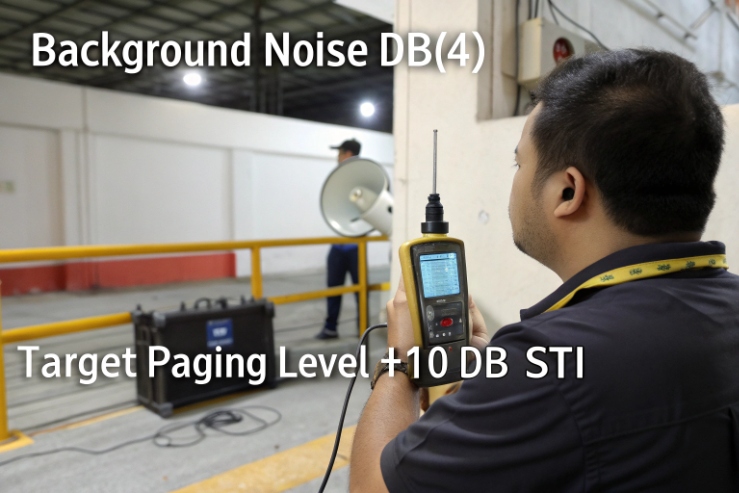
Dive Deeper: The Mathematics of Sound
1. Intelligibility: The STI Score
It is not enough for the sound to be loud; it must be clear. We measure this using the Speech Transmission Index 6 (STI), a scale from 0 (bad) to 1 (perfect).
-
The Standard: Most regulations (like NORSOK 7 or NFPA) require a minimum STI of 0.50 in 90% of the area.
-
The Challenge: In a metal room with engines running, sound bounces (reverb) and gets drowned out (noise). We use acoustic simulation software (like EASE) to model the room before we build it. We calculate how many speakers are needed and where to point them to minimize echo and maximize direct sound.
2. Line Supervision: The Silent Watchdog
How do you know if a speaker cable is cut? You can’t walk around checking 500 speakers every day.
-
The Technology: The PAGA controller sends a continuous, inaudible signal (usually 20kHz pilot tone or DC monitoring) down the speaker line.
-
The Check: If a wire is cut (Open Circuit) or touches the ground (Short Circuit), the impedance changes. The system detects this change within seconds and alerts the control room: "Fault on Loop A, Zone 3." This allows maintenance teams to fix breaks immediately.
3. Power Sizing and Headroom
We never load an amplifier to 100%.
-
The Calculation: If a zone needs 500 Watts of speaker power, we don’t buy a 500W amp. We buy a 1000W amp or use multiple modules.
-
Why?
-
Headroom: To handle transient peaks in the alarm tones without distortion.
-
Aging: Components degrade over 20 years.
-
Expansion: The client always adds more speakers later.
-
Derating: Amplifiers run less efficiently in hot industrial cabinets. We typically design for a 20-30% spare capacity on every channel.
-
Conclusion
A PAGA system is the voice of safety in a chaotic world. It integrates complex zoning, robust redundancy, and precise acoustic engineering to ensure that when the moment of crisis comes, the warning is heard, understood, and acted upon.
Footnotes
-
International Maritime Organization regulations concerning safety at sea. ↩ ↩
-
Microprocessors designed specifically for digital signal processing applications. ↩ ↩
-
Private branch exchange telephone systems that use internet protocol for internal communication. ↩ ↩
-
Control systems used to monitor and manage industrial processes across large facilities. ↩ ↩
-
Electronic amplifiers that use switching modes to achieve high power efficiency. ↩ ↩
-
A measure of speech transmission quality used to evaluate public address systems. ↩ ↩
-
Standards developed by the Norwegian petroleum industry for safety and cost-effectiveness. ↩ ↩








