

IPv4 shortcuts work until they do not. In hazardous plants, one wrong network move can break emergency calling and force a permit-controlled visit.
Many explosion-proof SIP telephones can support IPv6, but “support” must be defined: address mode (SLAAC/DHCPv6/static), SIP signaling over IPv6, RTP media behavior, security (TLS/SRTP), and provisioning over HTTPS. A clear test plan avoids surprises.

What “IPv6 support” really means on an Ex telephone
IPv6 on an explosion-proof telephone is not one checkbox. It is a set of behaviors that must stay stable in a locked-down industrial network. The best way to judge support is to test four layers together:
1) Addressing and DNS
A phone can show an IPv6 address and still fail in real use. Plants often require a specific address mode (Stateless Address Autoconfiguration 1/DHCPv6/static) to maintain network hierarchy.
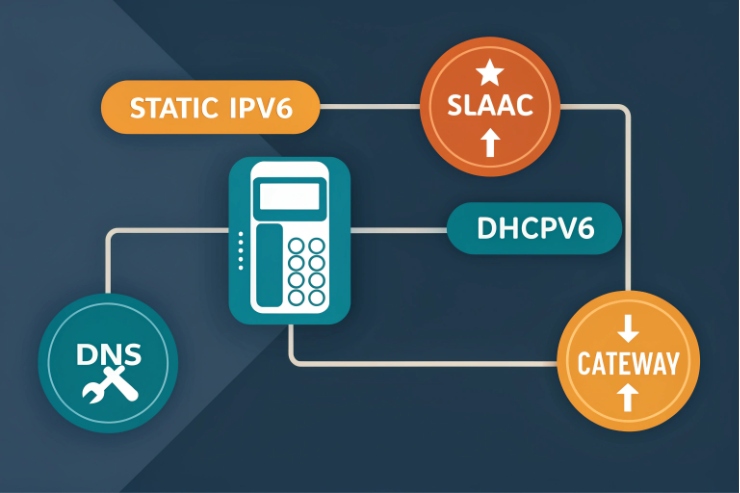
- Static IPv6 for fixed endpoints
- DHCPv6 for centralized control
- SLAAC for simple deployments
DNS also matters. Many sites want dual DNS entries (A + AAAA records) so the phone can resolve SIP servers and provisioning URLs in both stacks.
2) SIP signaling and RTP media
The phone should register to a SIP registrar/proxy over IPv6 and place calls with stable audio. Some devices can signal over IPv6 but still send RTP media over IPv4 only. That gap creates one-way audio in mixed networks.
3) Security controls over IPv6
If the security team requires TLS, SRTP, or strict ACLs, the phone must support them on IPv6 the same way it does on IPv4. Otherwise, IPv6 becomes a “side door” in the security model.
4) Enterprise features on IPv6
Industrial VoIP is not only “call.” It includes:
- VLAN tagging
- QoS/DSCP marking for voice
- multicast paging
- HTTPS provisioning
These must work the same way under IPv6, or rollout becomes slow and inconsistent.
| Layer | “Basic” IPv6 claim | “Procurement-ready” IPv6 claim |
|---|---|---|
| Addressing | Shows an IPv6 address | SLAAC + DHCPv6 + static, stable link-local handling |
| SIP | Registers in lab | SIP over IPv6 with failover and correct DNS behavior |
| Media | Audio works once | RTP over IPv6, no one-way audio in dual-stack |
| Security | HTTPS page loads | TLS/SRTP over IPv6, ACL-friendly behavior |
| Ops | Can be pinged | Monitoring, logs, and predictable provisioning |
A simple transition keeps projects calm: define what must work, then test it on the real switch, real VLAN, and real SIP platform.
Which IPv6 modes are available—SLAAC, DHCPv6, static addressing, dual DNS, and SIP over IPv6?
When IPv6 is added late, teams guess. Then endpoints get the wrong addresses, DNS fails, or SIP registration flaps under RA changes.
A solid Ex SIP phone should support static IPv6, SLAAC, and DHCPv6, plus reliable DNS resolution (A/AAAA) and SIP signaling over IPv6. The best setup depends on how tightly the plant controls addressing and change management.
DHCPv6
The DHCPv6 protocol 2 is preferred when the site wants central logging and repeatable configuration. It can also deliver options that help provisioning. Plants often like DHCPv6 because it fits change control and audit expectations.
Static IPv6
Static addressing is common for emergency endpoints and public safety locations. It makes troubleshooting easy and keeps device identity stable. The tradeoff is administration effort. Static works best when you also lock a clear DNS plan.
| Mode | Best fit | Typical plant risk | Spec detail that helps |
|---|---|---|---|
| SLAAC | fast rollout | rogue RA, route drift | require RA control and logs |
| DHCPv6 | managed sites | option mismatch | document required options |
| Static | emergency endpoints | manual errors | require naming plan + records |
| Dual DNS | dual-stack | slow failover | define retry timers and priority |
Can dual-stack IPv4/IPv6 be enabled with SIP registrar/proxy and RTP media fallback?
Dual-stack is the normal transition path. It can also hide problems because the phone “works” while silently falling back in a way that breaks paging or recording.
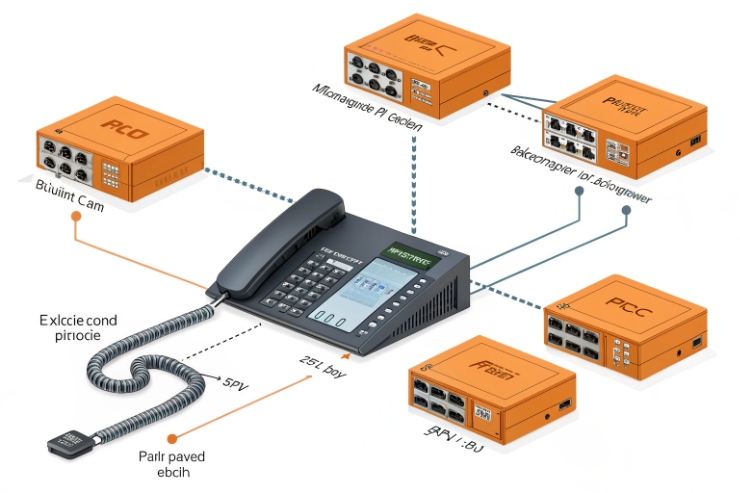
Yes, many Ex SIP phones can run dual-stack, but the project must define the preferred stack for SIP and RTP, and confirm clean fallback. The goal is predictable behavior: if IPv6 fails, the phone should fail over without long delays or one-way audio.
Define what “fallback” means
Yes, many Ex SIP phones can run dual-stack IPv4/IPv6 3, but the project must define the preferred stack for SIP and RTP.
There are three different fallback questions:
1) Can the phone register over IPv6 and place calls over IPv6?
2) If IPv6 routing breaks, does it quickly retry SIP over IPv4?
3) If SIP is on IPv6, can RTP media also stay on IPv6, or does it switch stacks safely?
A stable design allows SIP over IPv6 with RTP over IPv6 for normal calls, controlled failover to IPv4 when IPv6 becomes unreachable, and no long “dead time” during retries.
How are security and access controlled—TLS/SRTP over IPv6, IPsec, RA Guard, and switch ACLs?
IPv6 adds reachability. If security is not planned, it adds risk. Plants cannot accept a phone that is secure on IPv4 and open on IPv6.
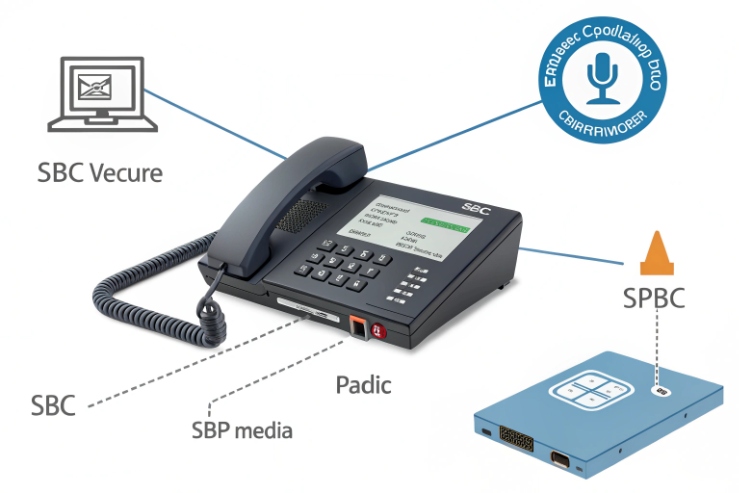
Security on IPv6 should mirror IPv4: TLS for SIP signaling, SRTP for media, strict access via switch ACLs, and network protections like RA Guard. IPsec can be used in some architectures, but most SIP deployments rely on TLS/SRTP plus segmentation.
TLS and SRTP over IPv6
The most common secure VoIP stack uses Secure Real-time Transport Protocol 4 for media. The phone should support the same cipher policy and certificate handling on IPv6 as on IPv4. Otherwise, the security team will block IPv6 traffic and you lose the benefit.
RA Guard and “who can advertise”
SLAAC and even stable IPv6 routing rely on router advertisements. Applying RA Guard security 5 on the access switch helps stop rogue RAs from unmanaged devices. In industrial networks with contractors and temporary gear, this control matters.
| Control | Where it lives | What it blocks | What to verify |
|---|---|---|---|
| TLS | phone + SIP server | sniffing and tampering | registration and rekey stability |
| SRTP | phone + PBX | media interception | audio quality and interoperability |
| RA Guard | access switch | rogue router ads | no unexpected default routes |
| IPv6 ACLs | switch/firewall | unwanted reachability | only approved flows succeed |
IPv6 support is not finished when the phone registers. Plants care about paging, QoS, and zero-touch replacement. These features must work on IPv6 too.
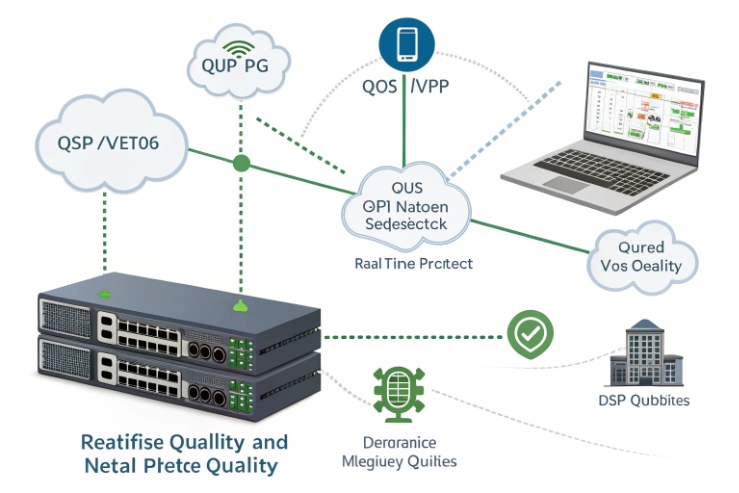
For real deployments, the critical IPv6 features are: consistent DSCP marking for SIP/RTP, VLAN tagging, MLD-based multicast paging behavior, and HTTPS provisioning over IPv6 URLs. These decide whether rollout is fast and stable.
QoS/DSCP under IPv6
QoS is still QoS. Carrying a consistent Differentiated Services Code Point 6 marking ensures that voice packets are prioritized correctly. The phone should mark SIP signaling and RTP media with the correct codes to avoid voice breakup.
MLD multicast paging
Multicast paging is common in industrial SIP systems. Under IPv6, multicast membership is handled with Multicast Listener Discovery 7 based behavior. The phone must join the correct multicast group on the correct VLAN and keep membership stable after link flaps.
| Feature | Why plants care | Fast acceptance test |
|---|---|---|
| DSCP marking | stable call quality | capture SIP/RTP and confirm DSCP |
| MLD paging | group alerts and dispatch | join group and confirm paging across VLAN |
| VLAN tagging | segmentation and policy | confirm tags on wire after reboot |
| HTTPS provisioning | fast replacement | factory reset and verify auto-config |
Conclusion
Explosion-proof telephones can support IPv6 when addressing, SIP/RTP, security, and provisioning are defined and tested together. For OEM guidance, email info@sipintercommanufacturer.com.
Footnotes
-
Learn how Stateless Address Autoconfiguration enables devices to automatically assign themselves an IPv6 address without a server. ↩ ↩
-
A guide to the DHCPv6 protocol used for stateful address assignment and configuration in IPv6 networks. ↩ ↩
-
Understanding the dual-stack IPv4/IPv6 transition mechanism that allows devices to communicate using both protocols simultaneously. ↩ ↩
-
Technical details on how the Secure Real-time Transport Protocol provides encryption and message authentication for VoIP media streams. ↩ ↩
-
How RA Guard security prevents rogue router advertisements from misconfiguring network devices in an IPv6 environment. ↩ ↩
-
An overview of the Differentiated Services Code Point mechanism for prioritizing network traffic based on service quality requirements. ↩ ↩
-
Explanation of Multicast Listener Discovery, the protocol used by IPv6 routers to discover multicast listeners on a link. ↩ ↩








