

A gasket that looks perfect in the lab can fail fast on site. One small leak can ruin uptime, trigger rework, and raise safety risk in a hazardous area.
Select gasket material by matching chemicals, UV/ozone, and temperature to the elastomer, then verify hardness, compression set, and creep at the real squeeze. In refineries, FKM often wins with hydrocarbons; EPDM wins with steam; silicone wins with UV and cold; NBR is budget oil-only.

A practical selection workflow for Ex telephones
Start with what the gasket must protect
For an explosion-proof telephone, the gasket is not only about “waterproof.” The gasket helps keep dust and water out, and it also helps the enclosure stay stable over years of vibration, thermal cycling, and maintenance open/close events. IP ratings 1 are a common target. IP66 focuses on dust-tight plus strong water jets, while IP67 adds temporary immersion protection. Those are defined under IEC 60529, and the test intent matters more than the marketing label. :contentReference[oaicite:0]{index=0}
In many outdoor or washdown projects, customers also ask for NEMA Type 4X 2. NEMA Type 4X is about windblown dust, rain and hose-directed water, plus added corrosion resistance for the enclosure. It is not “a gasket standard,” but gaskets must keep sealing after hose-down and weather exposure. :contentReference[oaicite:1]{index=1}
A simple rule works well in real projects: do not pick material first; pick the exposure list first. The exposure list should include:
- Media on the outside (salt fog, cleaning agents, UV, windblown sand)
- Media on hands and gloves (oil, diesel, solvent wipes)
- Media inside the plant air (hydrocarbon vapor, ozone from motors, acid mist near process areas)
- Temperature range at the gasket line, not only ambient
A short story from the field: on one coastal refinery project, the phone enclosure was stainless and “looked safe,” but the gasket was a low-cost NBR. The phone passed water tests at commissioning. After months of sun and ozone, the gasket hardened and lost squeeze. The first heavy hose-down pushed water past the seal and created a repeat maintenance loop. That one part cost less than lunch, but it caused several site visits.
Use a “fit-for-service” checklist, then validate with test data
A gasket compound is not only “EPDM” or “FKM.” Cure system, fillers, and hardness can change performance. So the best practice is to lock a few measurable specs and ask suppliers for test reports.
| Step | What to define | Why it matters for Ex telephones |
|---|---|---|
| 1 | Exposure list (chemicals + UV + temp + washdown) | Stops wrong material choice early |
| 2 | Target ingress level (IP66/67, NEMA 4X) | Sets sealing risk and test plan :contentReference[oaicite:2]{index=2} |
| 3 | Gasket geometry + squeeze % | Prevents over-compression and early creep |
| 4 | Material spec (hardness, compression set, aging, ozone) | Predicts long-term sealing force :contentReference[oaicite:3]{index=3} |
| 5 | Validation tests (liquid, heat aging, ozone/UV) | Connects site media to lab proof :contentReference[oaicite:4]{index=4} |
Now the sections below break down the four questions that always show up in explosion-proof telephone projects.
A good gasket choice should feel boring after year three. The goal is simple: less unplanned maintenance, fewer seal changes, and fewer “mystery water ingress” reports.
EPDM, NBR, FKM (Viton), or silicone—which gasket fits chemicals, UV, and temperature ranges?
Wrong chemistry match is the fastest way to kill a gasket. Swell, shrink, or hardening can appear before anyone notices. Then one washdown or rain event exposes the weakness.
Match the gasket to the dominant chemical family first, then confirm UV/ozone and temperature. FKM is strongest for fuels and many solvents, EPDM is strong for water/steam and weathering, silicone is strong for UV and temperature extremes, and NBR is best for oils with limited ozone/UV.
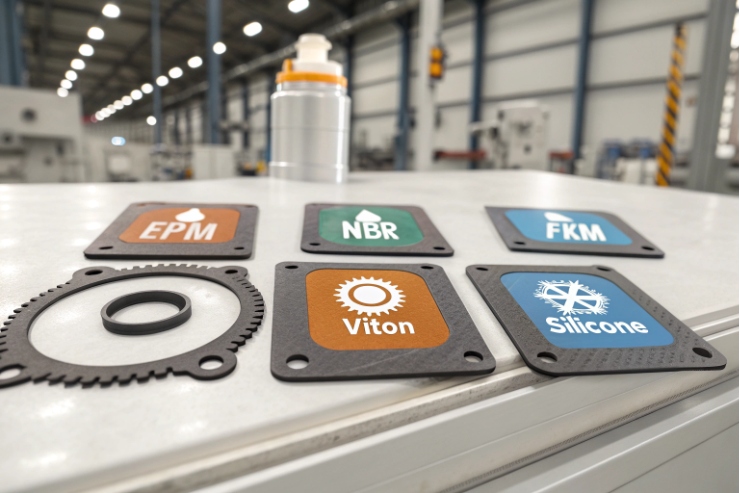
What each elastomer is “naturally good at”
Most refinery failures come from one of two mistakes: (1) using EPDM around oils and fuels, or (2) using NBR outdoors with sun and ozone. The chemical backbone decides the “default” behavior.
- EPDM: Great with water, steam, many polar fluids, and outdoor weathering. EPDM handles ozone and UV well in many compounds. EPDM is usually poor with petroleum oils, fuels, and many hydrocarbon solvents.
- NBR (nitrile): Great with petroleum oils and fuels, and it is often a cost-effective choice for indoor oily areas. Standard NBR is often weak against ozone and UV unless protected by design and additives.
- FKM (Viton is a common trade name): Strong with many fuels, oils, and many solvents, and it often keeps properties at higher temperatures. Some strong polar solvents (for example some ketones) can be a problem depending on grade, so compatibility must be checked for the actual solvent list.
- Silicone: Strong for very low and high temperatures, and often strong for UV/ozone exposure. Silicone is often weak with fuels, oils, and many hydrocarbons, and it can have higher gas permeability. For oil exposure with silicone-like weathering, fluorosilicone can be a better direction, but it costs more.
Temperature and UV are not “tie breakers”; they change the winner
Outdoor Ex phones see sun, wind, and rapid enclosure temperature swings. UV and ozone attack many rubbers by cracking the surface and speeding up hardening. Ozone resistance is often evaluated using ozone cracking tests such as ASTM D1149 3, and UV weathering is often evaluated by practices such as ASTM G154. :contentReference[oaicite:5]{index=5}
Heat also changes compression set and creep. A gasket that is fine at 25°C can lose sealing force fast at 70–90°C around hot pipe racks or under direct sun. Heat aging behavior is commonly evaluated with air-oven aging methods such as ASTM D573. :contentReference[oaicite:6]{index=6}
Quick selection map (then verify with immersion tests)
This table is a fast screen. It is not a final approval. Final approval should use real media testing (immersion or wipe exposure) and real compression conditions.
| Exposure driver | EPDM | NBR | FKM | Silicone |
|---|---|---|---|---|
| Hydrocarbon fuels/oils | ✗ | ✓✓ | ✓✓✓ | ✗ |
| Water / rain / steam | ✓✓✓ | △ | △ | ✓✓ |
| Outdoor UV/ozone | ✓✓✓ | △ | ✓✓ | ✓✓✓ |
| Very low temperature | ✓ | △ | △ | ✓✓✓ |
| High temperature sealing | ✓✓ | △ | ✓✓✓ | ✓✓✓ |
| Cost sensitivity | ✓✓ | ✓✓✓ | △ | △ |
If a plant uses aggressive cleaning solvents, do not rely on “typical charts” alone. Ask for an ASTM D471 liquid effect test plan using the exact cleaning agent and the actual process fluids. :contentReference[oaicite:7]{index=7}
What specs matter—IP66/67, Shore A durometer, compression set, and long-term creep?
Many gaskets fail even when the material family is “correct.” The reason is usually wrong hardness, wrong squeeze, or slow stress relaxation. The seal looks fine, but the force fades.
For long-life sealing, focus on the whole system: target IP/NEMA for the enclosure, then control gasket hardness (Shore A), squeeze %, and compression set at real temperatures. Long-term creep and stress relaxation decide how the seal behaves after years, not only after one test.
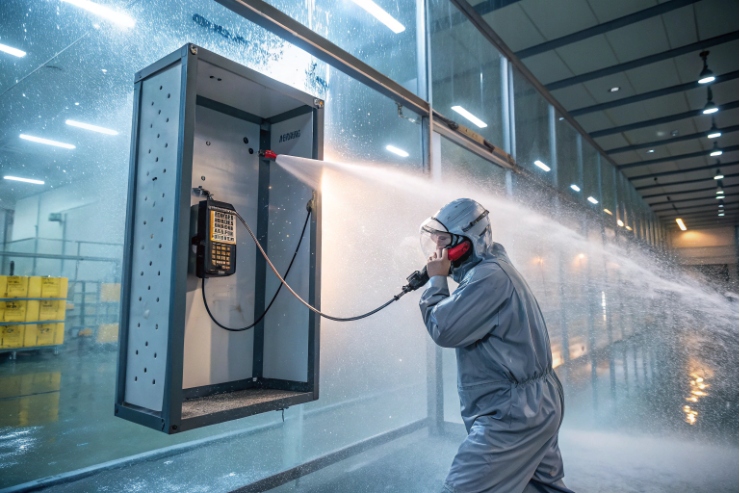
IP66/67 sets the leak risk target, not the material
IP codes classify enclosure protection against dust and water intrusion, and they link to defined test methods under IEC 60529 4. :contentReference[oaicite:8]{index=8}
Many Ex telephone projects choose IP66 for hose-down and heavy rain, and IP67 when short immersion is possible (flooding, pooling water, or cleaning practices). The key is to match the rating to the real hazard, because “higher IP” can require tighter tolerances and more controlled assembly.
Shore A hardness controls assembly feel and sealing force
Hardness is commonly measured using Shore durometer 5 methods such as ASTM D2240. :contentReference[oaicite:9]{index=9}
A gasket that is too soft can extrude, tear, or take a set fast. A gasket that is too hard may not conform to surface roughness, so it leaks under water jets. In many metal enclosure designs, a mid-range hardness works well, but the correct value depends on gland design and screw spacing.
Compression set predicts loss of sealing force
Compression set testing is widely used for elastomers because it shows how much thickness recovery is lost after compression. Common references include ASTM D395 and ISO 815-1. :contentReference[oaicite:10]{index=10}
A low compression set at the real service temperature is usually a strong signal for long gasket life. But compression set results must match the real squeeze and time. A single datasheet value at one temperature is not enough.
Long-term creep (stress relaxation) is the silent killer
In sealing, the gasket must keep pushing back. Over time, elastomers relax under constant strain, especially at higher temperature. This reduces contact pressure, and then micro-gaps open under water jets or vibration. Creep risk rises when:
- The gasket is over-compressed
- The enclosure flange is not flat
- The screws loosen or the housing distorts with heat
A practical spec set for procurement can look like this:
| Spec | How it is measured | What it controls in the field |
|---|---|---|
| IP66 / IP67 | IEC 60529 test classifications | Water and dust ingress risk :contentReference[oaicite:11]{index=11} |
| Shore A hardness | ASTM D2240 | Conformability vs extrusion risk :contentReference[oaicite:12]{index=12} |
| Compression set | ASTM D395 / ISO 815-1 | Long-term sealing force retention :contentReference[oaicite:13]{index=13} |
| Heat aging change | ASTM D573 | Hardening and property loss over time :contentReference[oaicite:14]{index=14} |
| Ozone/UV resistance | ASTM D1149 / ASTM G154 practices | Outdoor cracking and surface aging :contentReference[oaicite:15]{index=15} |
For explosion-proof telephones, the best result comes when the mechanical design team and the material team share the same squeeze target. A perfect compound cannot fix a poor gland.
Do ATEX/IECEx or NEMA 4X require specific gasket tests—salt spray, oil resistance, and aging?
Many teams assume certification automatically defines gasket tests. In real projects, the standards focus on the complete product and its protection concept. The gasket is a part of that system.
ATEX/IECEx and NEMA 4X do not name one universal “gasket test list,” but they do drive evidence needs. In practice, labs and customers often expect proof for sealing integrity plus environmental resistance: corrosion (salt spray), liquid resistance (oils/solvents), and aging (heat, ozone/UV).
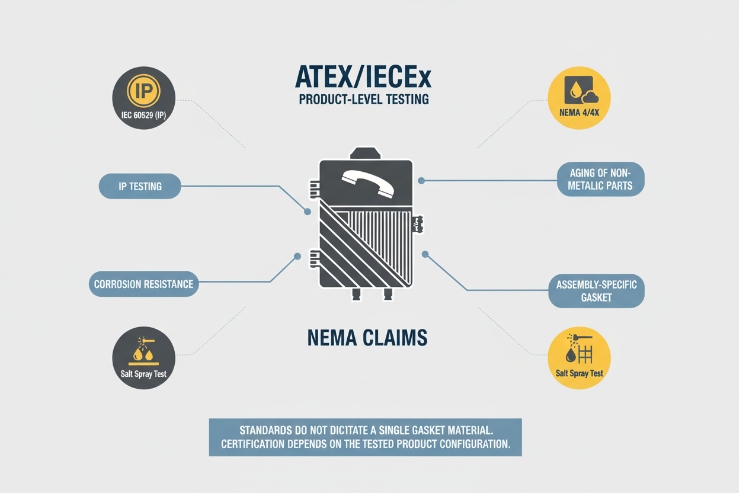
What ATEX/IECEx usually cares about for gaskets
ATEX and IECEx assessments are based on protection concepts (like Ex d, Ex e, Ex i) and general construction rules under the IEC 60079 series. Product compliance is documented with test reports such as ATEX and IECEx 6 ExTR for the evaluated standard clauses. :contentReference[oaicite:16]{index=16}
A gasket often impacts:
- Ingress protection claims used in the product specification
- Long-term enclosure integrity (for example, whether the gasket stays in place and does not create gaps)
- Safe assembly and maintenance consistency
There are also updates in EN/IEC 60079-0 over time. For example, some versions add requirements related to gasket retention where adhesive is used. That pushes practical attention to how gaskets are fixed, not only the rubber type. :contentReference[oaicite:17]{index=17}
What NEMA 4X pushes you to prove
NEMA Type 4X is defined around protection against hose-directed water and corrosion resistance for the enclosure, for indoor or outdoor use. :contentReference[oaicite:18]{index=18}
NEMA does not tell you “use EPDM only,” but if the enclosure must stay watertight after repeated hose-down, the gasket must keep shape and force. If the project is coastal or chemical, corrosion plus salt deposits can change flange surfaces, so the gasket must tolerate that reality.
A realistic “evidence package” many customers accept
This is a practical test list that matches what many industrial buyers ask for. It also matches common lab capability.
| Test topic | Common standard reference | Why it helps gasket confidence |
|---|---|---|
| Salt fog / corrosion screening | ASTM B117 | Supports 4X-style corrosion exposure planning :contentReference[oaicite:19]{index=19} |
| Oil / solvent effect on rubber | ASTM D471 | Shows swell, shrink, hardness change in liquids :contentReference[oaicite:20]{index=20} |
| Heat aging | ASTM D573 | Shows long-term hardening and strength loss :contentReference[oaicite:21]{index=21} |
| Ozone cracking | ASTM D1149 | Screens outdoor cracking risk near ozone sources :contentReference[oaicite:22]{index=22} |
| UV weathering practice | ASTM G154 | Screens UV-driven loss of properties :contentReference[oaicite:23]{index=23} |
| Hardness control | ASTM D2240 | Ensures production lots match sealing design :contentReference[oaicite:24]{index=24} |
| Compression set control | ISO 815-1 / ASTM D395 | Predicts seal force fade over time :contentReference[oaicite:25]{index=25} |
Salt spray is often misunderstood. ASTM B117 describes how to run the salt fog environment, but it does not define exact exposure time or “pass/fail” for every product. The buyer and manufacturer should agree on duration and acceptance criteria. :contentReference[oaicite:26]{index=26}
How do solvents, acids, and hydrocarbons in refineries impact gasket life and maintenance intervals?
Refineries are tough because exposure is not stable. One week is only hydrocarbons, then a cleaning program brings strong solvents, then weather adds UV and salt. The gasket must survive the mix.
In refineries, gasket life is driven by swell or extraction from hydrocarbons and solvents, plus hardening from heat and ozone/UV. Plan maintenance by monitoring sealing force indicators (set, cracks, leaks) and by testing the gasket compound in the actual site chemicals, not only “typical fuel.”
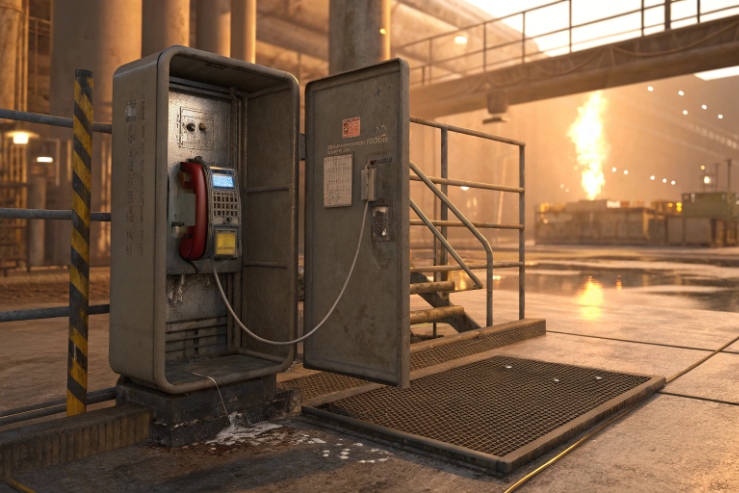
The refinery exposure patterns that matter most
Refinery gasket damage usually comes from these patterns:
- Hydrocarbon contact: diesel, gasoline, crude fractions, aromatic vapor, oily films on hands and gloves
- Solvent cleaning: wipe-down with strong cleaners, ketone-like solvents, alcohol blends, or specialty degreasers
- Acid and caustic mist: localized areas near chemical dosing or cleaning stations
- Heat and thermal cycling: sun load, hot pipe racks, night cooling, and enclosure self-heating
- Ozone and UV: outdoor placement, and ozone sources near motors and switching gear
The right way to predict chemical damage is to test the rubber in the real liquids, at real temperature, and measure changes in volume, mass, hardness, and tensile properties. ASTM D471 7 is a common method reference for evaluating rubber behavior in liquids. :contentReference[oaicite:27]{index=27}
Typical failure modes seen on site
A gasket rarely “snaps” without warning. It degrades in visible and measurable ways:
- Swell and softening: often from oils or solvents that penetrate the rubber, which can push the gasket out of its groove
- Shrink and hardening: often from plasticizer extraction or heat aging, which reduces contact force
- Surface cracking: often from ozone/UV attack, which starts at stretched corners
- Compression set and stress relaxation: slow loss of rebound force, which shows up as leaks under water jets
Heat aging tests such as ASTM D573 help screen how quickly properties change at elevated temperature. Ozone cracking tests such as ASTM D1149 help screen cracking risk in outdoor or ozone-rich areas. :contentReference[oaicite:28]{index=28}
Turning chemistry into maintenance intervals
No single interval fits all refineries. A phone under shade with mild washdown can keep a gasket for years, while a phone near a loading rack with solvent wipes may need planned changes sooner. The best approach is risk-based:
- Classify locations: low, medium, high chemical contact
- Pick compound per class: do not force one gasket across the whole refinery
- Set inspection triggers: cracks, visible set line, sticky swell, repeated fogging inside lens
- Use data from field returns: adjust intervals based on actual failures
A simple planning table helps maintenance teams.
| Refinery exposure | What it does to gaskets | Higher-risk materials | Typical mitigation |
|---|---|---|---|
| Fuels and oily films | Swell, softening, loss of shape | EPDM, silicone | Favor FKM or suitable NBR; confirm by liquid tests :contentReference[oaicite:29]{index=29} |
| Strong solvent wipes | Rapid swell or extraction | EPDM, NBR, silicone (depends on solvent) | Specify approved cleaners; run D471 in the exact cleaner :contentReference[oaicite:30]{index=30} |
| Acid/caustic splash zones | Surface attack, embrittlement | NBR (often), some FKM grades | Add splash shields; relocate; confirm compatibility |
| Outdoor sun + ozone | Cracking, hardening | Standard NBR | Use EPDM or silicone; validate ozone/UV resistance :contentReference[oaicite:31]{index=31} |
| High gasket-line temperature | Compression set, force fade | Low-grade NBR | Use FKM or high-temp EPDM/silicone; validate heat aging :contentReference[oaicite:32]{index=32} |
For explosion-proof telephones, a conservative habit pays back: treat gasket replacement as planned preventive work in high-exposure areas, not as a surprise repair after water ingress.
Conclusion
A gasket is a small part, but it protects the whole Ex phone. Match media, UV, and heat, then validate compression set and aging. Need help? info@sipintercommanufacturer.com
Footnotes
-
Learn how IP ratings classify the degrees of protection provided against the intrusion of solid objects and water. ↩ ↩
-
A detailed guide to NEMA Type 4X enclosures designed for corrosion protection and hose-directed water resistance. ↩ ↩
-
This standard outlines test methods for measuring the resistance of rubber materials to surface cracking under ozone exposure. ↩ ↩
-
The international standard for degrees of protection provided by enclosures, essential for explosion-proof equipment design and testing. ↩ ↩
-
Understanding how Shore durometer scales measure the hardness of elastomers to ensure proper sealing pressure in industrial housings. ↩ ↩
-
Official resources for ATEX and IECEx certification schemes governing electrical equipment in explosive and hazardous environments. ↩ ↩
-
The standard test method for evaluating how various liquids affect the physical properties of rubber and elastomeric gaskets. ↩ ↩








