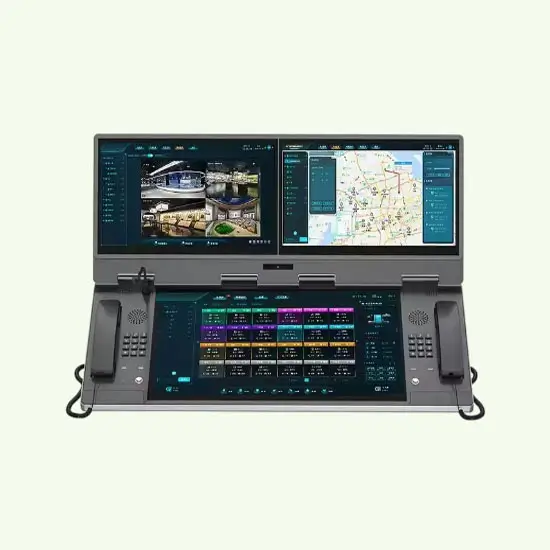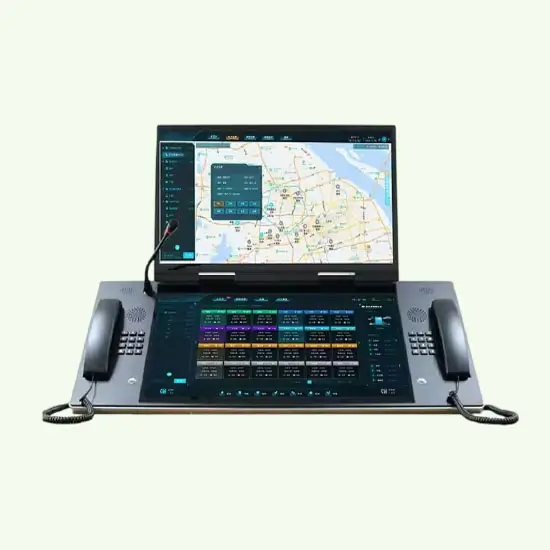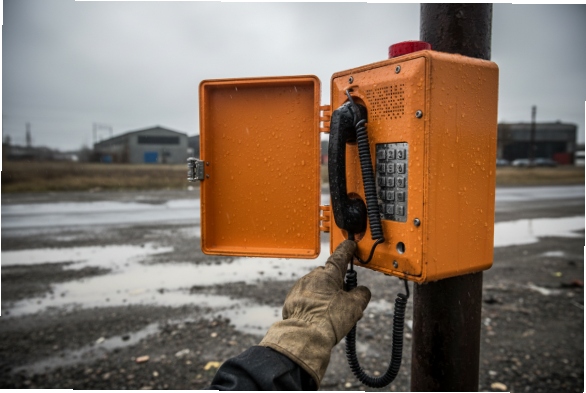
A site can lose minutes in one alarm. If video and audio do not show up fast, people guess. Guessing is where accidents start.
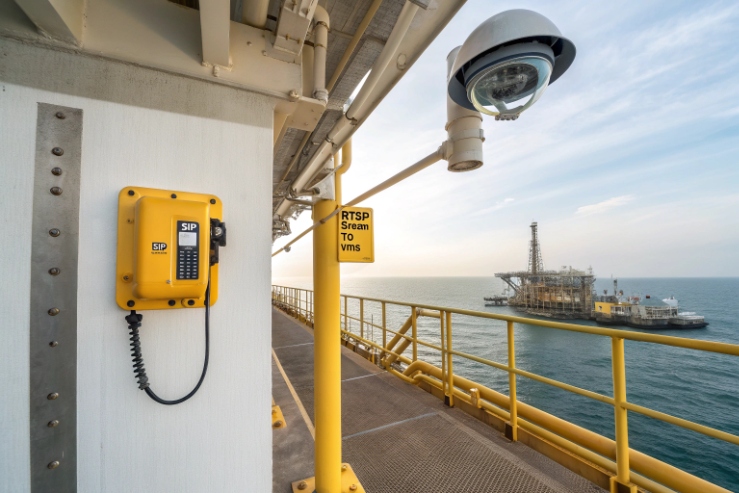
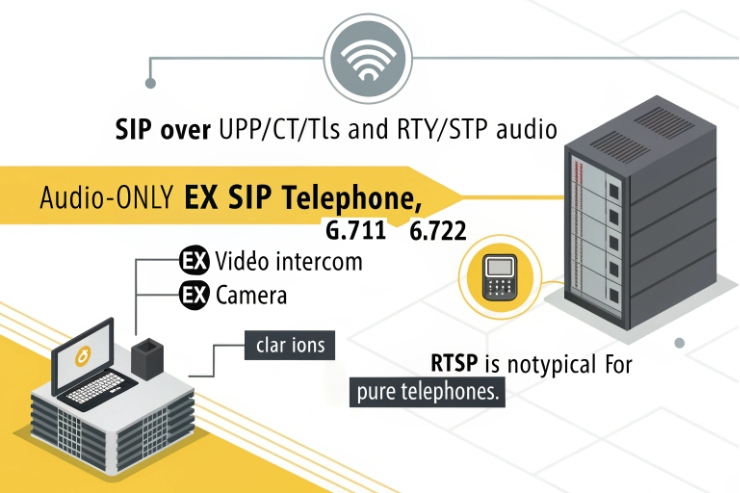
RTSP is feasible only when the “telephone” is actually a streaming endpoint, like an explosion-proof video intercom or a phone with an IP media encoder. Audio-only SIP phones usually do not expose RTSP.
When does RTSP belong in an explosion-proof telephone project?
RTSP is a streaming control path, not a calling path
In my projects, RTSP 1 solves one clear job: a VMS/NVR pulls a live stream for viewing and recording. SIP solves a different job: the device registers, calls, answers, and reports call state. When a customer says “explosion-proof telephone with RTSP,” it often means one of two things:
-
An explosion-proof video intercom that can do SIP calling and also provide a camera stream for the VMS.
-
A separate camera near an explosion-proof phone, where the phone triggers recording, but the stream comes from the camera.
A classic explosion-proof telephone is an audio endpoint. It uses SIP for signaling and RTP for voice. It may have local recording, dry contacts, and paging. But it usually does not behave like a camera, so RTSP is not a default feature.
A simple decision tree that prevents wrong expectations
If the endpoint has no camera and no media server function, RTSP adds little value. If the endpoint has a camera, RTSP becomes useful because most VMS platforms 2 can ingest RTSP even when ONVIF is weak or missing.
There is also a hidden benefit. RTSP lets the VMS record “what the camera saw” even if the SIP call never connected, or the operator did not answer. That is a strong safety argument on harsh sites.
| Device reality | What RTSP can do | What SIP can do | Best integration goal |
|---|---|---|---|
| Audio-only explosion-proof phone | Usually nothing (no stream) | Calls, hook events, paging | Trigger nearby cameras and log calls |
| Explosion-proof video intercom | Provide video (and sometimes audio) to VMS | Calls + talkback | One button = call + pop-up + record |
| Phone + separate camera | VMS records from camera | Phone triggers incident | Keep phone simple, keep video strong |
A short story worth repeating on sites
In one shutdown job, the team asked for “RTSP from the emergency phone.” The real need was video proof of who pressed SOS. We solved it by placing a certified camera beside the phone and linking phone events to recording. That design passed faster, and it kept hazardous-area approvals clean.
What protocols and codecs are supported—RTSP/RTP over TCP/UDP, H.264/H.265, and G.711 alongside SIP?
Common designs use SIP + RTP for voice calls, and RTSP to let an NVR pull a separate live stream. RTSP can carry RTP over UDP, or RTP interleaved over TCP. Video is usually H.264 or H.265, while call audio stays on G.711.
RTSP transport modes that matter in the field
RTSP is the session control layer. The media is typically RTP. What matters is how RTP moves:
-
RTP over UDP: lower latency and common for surveillance. It is sensitive to packet loss.
-
RTP interleaved over TCP: easier through firewalls and NAT. It can add delay and jitter because TCP retransmits and blocks in order.
Most VMS platforms can handle both, but performance differs. On noisy networks, UDP can look “choppy,” and TCP can look “smooth but late.” For emergency response, late video can be as bad as no video. That is why I treat transport mode as a design choice, not a default.
Codec expectations for hazardous-area endpoints
If the device is a video intercom, H.264 3 is still the safest interoperability codec. H.265 4 saves bandwidth, but it can raise decoding load on older NVRs. Some sites also lock down codecs for long-term storage consistency.
Audio in SIP calling commonly remains G.711 5 because it is simple and widely supported. The RTSP stream may also include audio, but many VMS projects record video-only to reduce complexity.
Yes, most NVR/VMS platforms can ingest RTSP for live view and recording without ONVIF. For event-triggered recording and snapshots, a second trigger path is needed, like SIP call-state, HTTP API/webhooks, or digital I/O into the VMS.
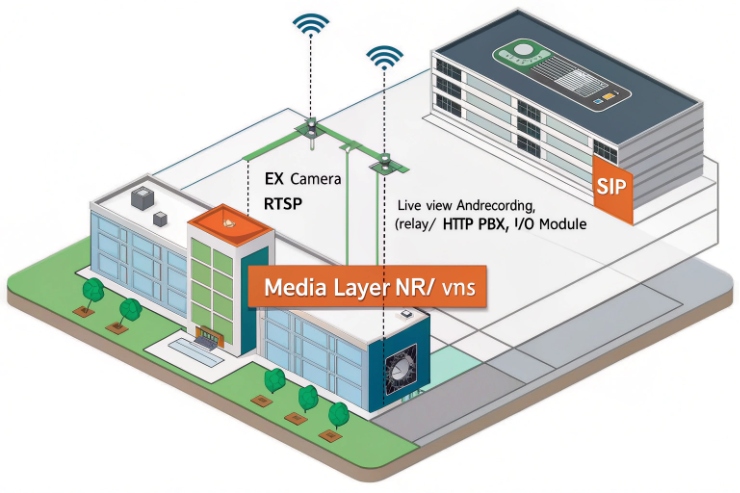
What RTSP alone can usually do
RTSP works well for:
- Add camera by URL
- Continuous recording
- Scheduled recording
- Live view and export
This is already valuable for compliance and incident review. If a site can accept continuous recording on key points, the system becomes simpler and more robust.
What network design ensures stable streams—unicast vs multicast, QoS/DSCP, jitter buffers, and bandwidth per channel?
Stable streaming comes from limiting viewers (unicast), controlling bitrate, using QoS/DSCP end-to-end, sizing jitter buffers, and budgeting bandwidth per channel with headroom. Multicast can help at scale, but it adds network complexity.
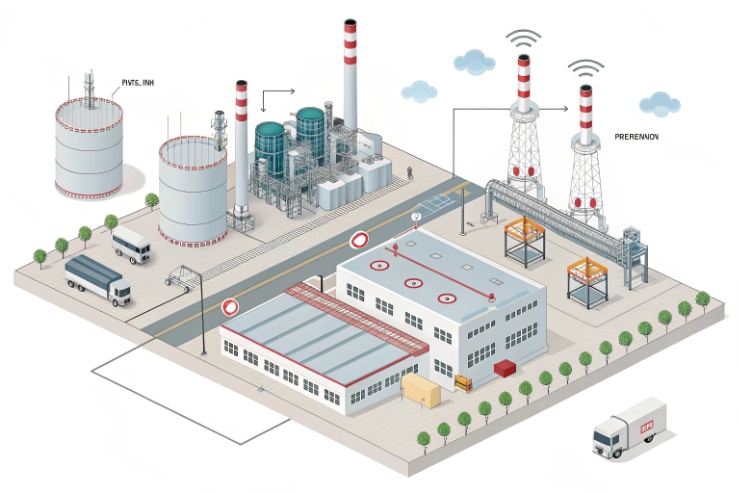
Unicast vs multicast on real sites
For most security deployments, RTSP is used in unicast mode:
- One NVR pulls one stream per channel.
- Operators view from the NVR’s proxy stream, not directly from the device.
This reduces load on the endpoint and keeps bandwidth predictable.
Multicast can reduce bandwidth when many clients need the same stream. But it requires: IGMP snooping 6, PIM routing, and careful control of who can join the group. Many plants avoid multicast outside a limited AV network.
QoS and DSCP that actually help
QoS only works if it is consistent from endpoint to switch to router to recorder. Marking packets on one hop is not enough.
A simple marking approach that is easy to explain to IT:
- SIP signaling 7: often CS3 in many UC designs
- RTP voice: EF (DSCP 46) for low delay
- Video media: AF41 (DSCP 34) is common for interactive video
How are security and compliance handled—RTSP authentication, encryption alternatives, and ATEX/IECEx temperature and IP ratings?
RTSP security usually starts with strong authentication and network isolation. Encryption is possible via RTSP-over-TLS (RTSPS) or RTSP tunneled over HTTPS, but support varies, so VPNs and secure VLANs are common alternatives. Hazardous compliance stays tied to ATEX/IECEx (or Class/Division), temperature class, and IP ratings of each device in its installed location.
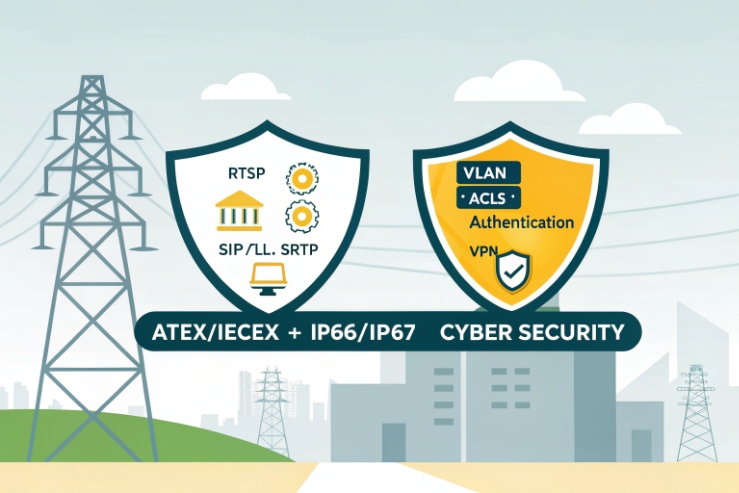
Conclusion
RTSP can work on explosion-proof “telephones” only when they include a real stream. If not, keep SIP strong, use nearby cameras, and design events, network, and compliance from day one.
⸻
Footnotes
-
RTSP is a network control protocol designed for controlling streaming media servers within communication systems. ↩ ↩
-
VMS platforms are software solutions that allow users to centrally record, view, and manage security camera video. ↩ ↩
-
H.264 is a block-oriented motion-compensation-based video compression standard used widely for recording and high-definition video. ↩ ↩
-
H.265 is a video compression standard designed to improve data compression significantly while maintaining high video quality. ↩ ↩
-
G.711 is a standard for audio companding used for digital telephony systems in pulse-code modulation. ↩ ↩
-
IGMP snooping is a network process that manages multicast traffic to prevent flooding on local area networks. ↩ ↩
-
SIP signaling is a protocol used for initiating and terminating interactive user sessions that include voice and video. ↩ ↩