
Unknown numbers keep hitting your trunks. Caller ID looks wrong or is missing, and your routing rules start to fall apart when you need them most.
Automatic Number Identification (ANI) is the network-supplied billing number for the calling party, delivered in signaling so you can identify, route, and secure calls even when caller ID is hidden.
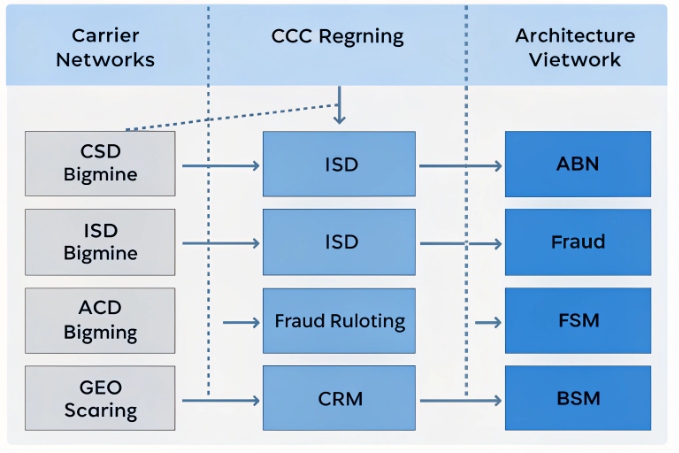
Automatic Number Identification (ANI) 1 came from billing and routing needs for toll-free and premium numbers. It still fills that role, but today it also powers CRM lookups, geo-routing, and fraud checks in SIP contact centers 2. The trick is to understand how ANI differs from caller ID, what happens to it over SIP, and how far you can safely use it without crossing privacy or compliance lines.
How is ANI different from caller ID?
People often treat ANI and caller ID 3 as the same thing. That shortcut causes bad routing, wrong assumptions, and messy security stories.
ANI is the carrier’s billing number for the call, while caller ID is the user-presented callback identity; they can match, but they often do not.
Network truth vs screen display
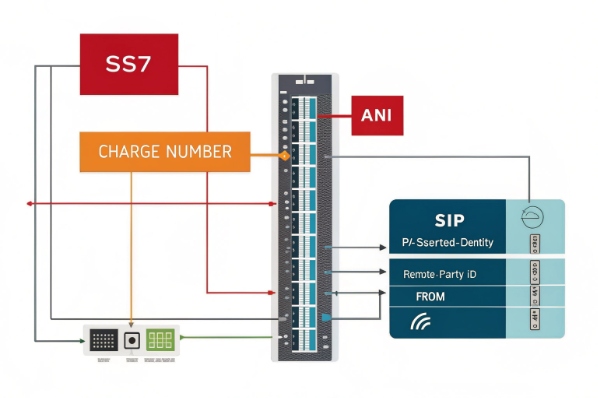
ANI came from the network’s need to know who pays for a call. In SS7, it maps to the Charge Number. The carrier sets it, and it is tied to a billable line, not to a handset’s display setting.
Caller ID is different:
- It is the number you see on the screen.
- It may be set by the PBX, SIP trunk, or user device.
- It can use CNAM to show a name, not only a number.
Blocking caller ID hides that screen identity, but it usually does not hide ANI, especially for toll-free numbers and emergency services.
In real environments, you see cases like:
- A large PBX sends a single main billing number as ANI, while caller ID carries the extension or direct line.
- A contact center uses branded caller ID for outbound but keeps the trunk’s chargeable ANI behind the scenes.
So your ACD and IVR must know which value they use for what.
ANI, Caller ID, and DNIS at a glance
A simple comparison helps frame the roles:
| Field | Who sets it | Main purpose | Typical use in contact center |
|---|---|---|---|
| ANI | Network / carrier | Billing, upstream routing | CRM lookup, geo-routing, fraud hints |
| Caller ID | PBX / device / trunk | Display to callee | Callbacks, customer trust, branding |
| Dialed Number Identification Service (DNIS) 4 | Network / dialed path | Destination number called | Menu mapping, service / campaign ID |
When you design flows, treat ANI as one signal among many. Do not assume it always equals “the real personal phone number.” It might be an office switchboard, a SIP gateway, or even a shared outbound trunk for many users.
Can ANI improve fraud detection and routing?
ANI looks like a strong identity, so it is tempting to treat it as “truth.” But attackers also know how networks work and try to abuse that trust.
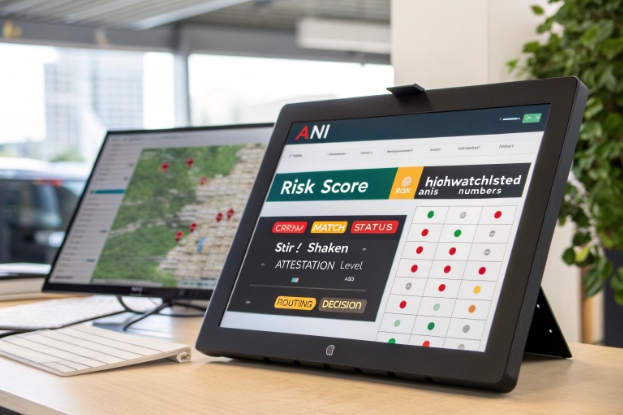
ANI can improve fraud detection and routing by feeding risk scores, geo hints, and CRM matches, but it must be combined with other signals because spoofing and aggregation still exist.
Using ANI as a signal, not a single source of truth
Contact centers already use ANI for simple things:
- Pull the likely customer record before the agent answers.
- Guess language or region from country and area code.
- Route business customers to the right account team.
Fraud and security teams can push this further by treating ANI as one piece in a risk score:
- Check if the ANI matches numbers on a “trusted customer” list.
- Flag ANIs known for chargebacks, scams, or abuse.
- Look for strange patterns, like many different identities using the same ANI.
When STIR/SHAKEN attestation 5 is present on SIP trunks, you can also fold in:
- Whether the calling number was signed by a trusted provider.
- Whether the attestation level suggests the originator really controls that number.
But you still keep the mindset: ANI helps, it does not replace authentication.
Smart routing and personalization with ANI
Used well, ANI also improves routing and experience:
- Known VIP ANI? Route to a high-skill or priority queue.
- Local area code? Offer a local language or accent when you have it.
- Known device type or segment behind that ANI? Tailor scripts and IVR paths.
A simple table shows how ANI can drive actions:
| Use case | ANI role | Example action |
|---|---|---|
| CRM pre-match | Key for database lookup | Pop customer record before agent answers |
| Geo-routing | Country / area code hint | Route to nearest region or language team |
| Risk screening | Check against watchlists and patterns | Increase security steps or send to specialist |
| VIP experience | Match against premium customer numbers | Shorter queue, more experienced agents |
In my own designs, the safest pattern is “ANI plus something else.” For example, use ANI for a soft match, then ask the caller to confirm a short piece of data or complete a one-time code step before you expose sensitive account details.
How do carriers deliver ANI over SIP?
In the TDM world, ANI was carried in SS7. In SIP environments, that same idea has to pass across IP networks, SBCs, and trunks with many different vendors.
Over SIP, ANI is carried in trusted identity headers like P-Asserted-Identity or Remote-Party-ID, often mapped from SS7 Charge Number by the carrier or SBC.

From SS7 Charge Number to SIP headers
In legacy networks, toll-free and other services saw ANI through SS7 parameters like Charge Number. When calls enter IP/SIP, gateways and SBCs translate those fields into SIP headers.
Common patterns include:
- P-Asserted-Identity (PAI): used in trusted networks to state who the network believes the caller is, as described in P-Asserted-Identity SIP headers 6.
- Remote-Party-ID (RPID): an older header still used by many platforms.
- From: header: visible identity, closer to caller ID than to raw ANI.
Your provider might:
- Place the ANI in PAI and the caller ID in From.
- Use the same value for ANI and caller ID when there is no difference.
- Drop or normalize some information when calls cross borders or carriers.
Which header should your platform trust?
Inside a closed SIP environment, you can define clear rules. Across the public network, you need to be more careful.
A useful view:
| SIP element | Typical content | Trust level in apps |
|---|---|---|
| P-Asserted-Identity | Network-asserted ANI/identity | High, but only from trusted SBC |
| Remote-Party-ID | Caller identity, sometimes ANI | Medium, legacy behavior |
| From: header | Display caller ID | Lower, easier to manipulate |
| Charge-Number (if used) | Billing line info | High, but often stripped in transit |
In a contact center stack, it is common to:
- Terminate carrier SIP on an SBC or edge gateway.
- Normalize identity into a standard internal header or variable.
- Pass that normalized ANI into IVR, ACD, and CRM logic.
You also need to handle edge cases:
- Some international routes may replace ANI with a generic gateway number.
- Some PBXs will always send their billing number as ANI, hiding individual extensions.
So your logic must handle “no useful ANI” gracefully, and not break flows when the upstream carrier changes how they signal.
What privacy rules affect ANI use?
ANI feels like a nice, technical value. But in many regions it is personal data, and rules apply to how you store and use it.
ANI use is limited by privacy and telecom rules that treat phone numbers as personal data, set special cases for toll-free and emergency calls, and require clear, lawful purposes and retention.
ANI, toll-free, and emergency calls
There are some places where you usually cannot hide ANI:
- Toll-free numbers, where the called party pays.
- Emergency services, which must know where to send help.
In these cases, networks deliver ANI even if the user turns on caller ID blocking. That does not mean you can do anything you like with it. It only means the network wants the call to complete with enough data for billing and safety.
You should still:
- Limit access to ANI in your tools and logs.
- Use it for the stated purpose (service, safety, billing), not for surprise marketing.
Responsible use of ANI inside your systems
Think of ANI as personal data tied to a person or business. That means:
- Store it securely, with the same care as other customer identifiers.
- Minimize where it appears in logs, exports, and analytics.
- Apply retention policies so you do not keep it longer than needed.
A simple policy frame:
| Scenario | Legal/ethical expectation | Safe practice with ANI |
|---|---|---|
| Service and support calls | Use for identification and routing | Link to CRM, limit reuse outside service |
| Fraud and security checks | Use as part of risk management | Combine with other signals, document purposes |
| Marketing / outbound campaigns | Needs consent and opt-outs | Check against consent and DNC lists |
| Analytics and reporting | Avoid unnecessary personal granularity | Aggregate or hash numbers where possible |
Regulations like TCPA and GDPR 7 may treat phone numbers as personal data or regulated contact points. So your legal team should review where ANI flows, especially when you re-use inbound ANI in outbound dialing, profiling, or cross-channel marketing.
This is why many designs keep a clear separation between:
- Operational use of ANI for routing and service during the call.
- Profile use of ANI as part of a customer identity in CRM, under consent and privacy rules.
When those paths are clear, you get the technical benefits of ANI without turning it into a quiet compliance problem.
Conclusion
ANI is powerful network metadata. When you understand how it differs from caller ID, how SIP delivers it, and which privacy rules shape its use, you can route smarter and fight fraud without breaking trust.
Footnotes
-
Overview of ANI and how automatic number identification works for carriers and contact centers. ↩ ↩
-
How ANI data supports routing, fraud detection, and caller risk analysis in contact centers. ↩ ↩
-
Explanation of differences between ANI and caller ID and why ANI is more reliable for routing. ↩ ↩
-
Details on Dialed Number Identification Service and how DNIS complements ANI for routing. ↩ ↩
-
Guide to STIR/SHAKEN call authentication, attestation levels, and how verified caller identity reduces spoofing. ↩ ↩
-
Technical description of the P-Asserted-Identity SIP header and its role in trusted caller identity. ↩ ↩
-
High-level overview of TCPA, GDPR, and global communication compliance for voice and messaging campaigns. ↩ ↩








